
Tillandsia caulescens
Tillandsia caulescens
Description
Growing requirements
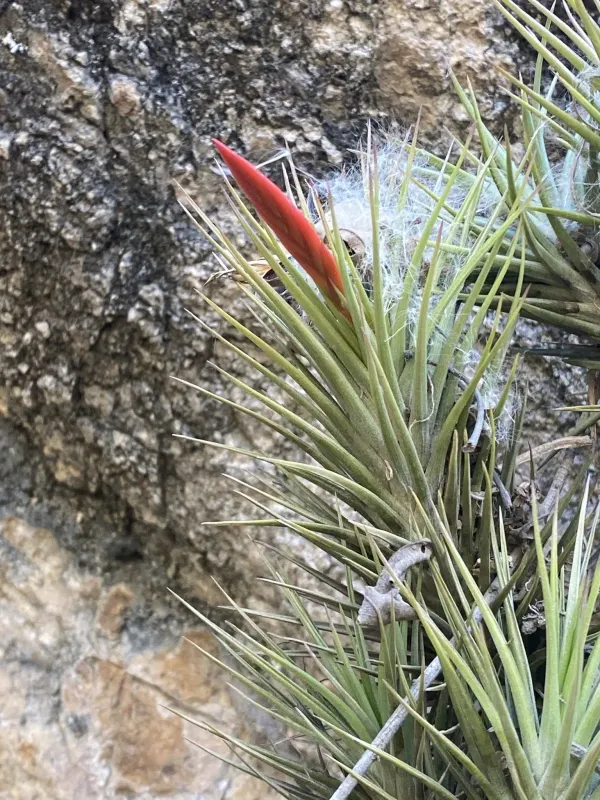
Tillandsia caulescens is an intriguing epiphytic species belonging to the Bromeliaceae family. Native to the mountain regions of South America, this plant is well-adapted to high-altitude environments where it grows on rock crevices and tree branches, relying on atmospheric moisture for survival.
Botanically, this species is defined by its caulescent (stem-forming) habit, which sets it apart from many other rosette-forming tillandsias. The leaves are typically narrow and covered in specialized scales called trichomes, which are essential for absorbing humidity and minerals directly from the surrounding air.
To cultivate this plant successfully, one must replicate its natural high-airflow habitat. Stagnant air is the primary enemy of the plant, as it inhibits proper gas exchange and promotes the accumulation of moisture, which can lead to rapid decay of the central stem.
Light requirements are strict: the plant thrives in bright, filtered light. While it needs intensity to maintain its structural integrity, direct midday sunlight can scorch the delicate foliage, causing irreversible physiological damage to the plant tissue.
Watering should be performed by misting with distilled or rainwater, ensuring the foliage dries completely within a few hours. Because these plants are epiphytes, they do not require traditional soil; they are often mounted on wood or cork bark to allow for optimal drainage and root aeration.
Main diseases and pests
The most significant threat to Tillandsia caulescens is crown rot, caused by trapped water in the stem or leaf axils. If water does not evaporate in a timely manner, the base of the plant can rapidly succumb to fungal infections, leading to the collapse of the stem.
Common indoor pests include mealybugs and spider mites. These insects thrive in dry, stagnant air conditions and can cause severe damage by sucking sap from the leaves, resulting in stunted growth and eventual decline of the plant if left untreated.
Scale insects represent another potential hazard. They appear as small, hard, brownish bumps on the stem or leaves and are difficult to eradicate once they have established a colony, often requiring repeated treatments with insecticidal soaps.
Fungal leaf spot diseases may appear if the plant is kept in high humidity without adequate ventilation. Proactive management involves removing any dead or decaying tissue and ensuring the plant is kept in an area with good air circulation.
Overall, maintaining a balance between moisture and dryness is key. By observing the plant regularly and ensuring it receives proper light and air movement, growers can effectively minimize the risk of both pest infestations and pathogenic attacks.