
Tillandsia capillaris
Tillandsia capillaris
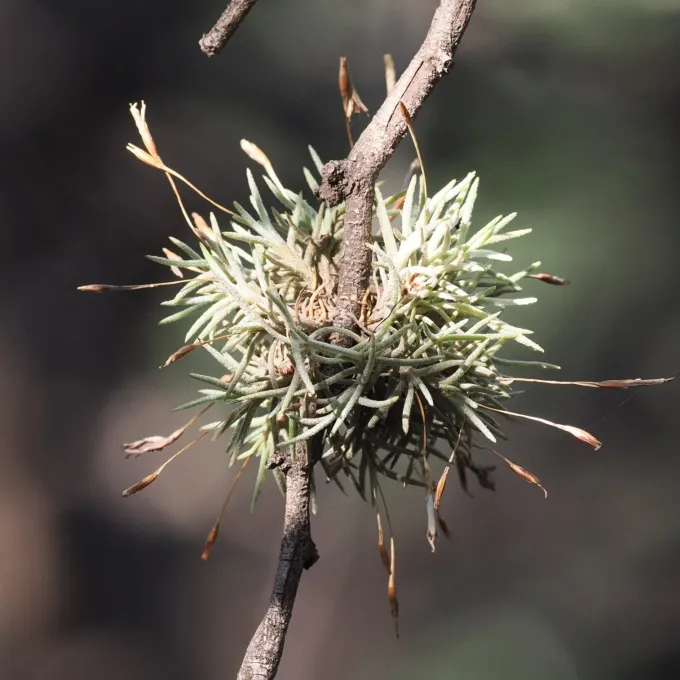
Description
Growing requirements
Tillandsia capillaris belongs to the family Bromeliaceae. This miniature epiphytic plant is native to the high-altitude regions of South America, including Argentina and Bolivia, where it thrives on tree branches or rocky outcrops as an air plant.
The botanical structure of this species is highly specialized, featuring thin, hair-like leaves covered in dense scales called trichomes. These structures are evolutionary adaptations that allow the plant to absorb moisture and nutrients directly from the atmosphere.
For successful cultivation, Tillandsia capillaris requires bright, indirect light and excellent air circulation. The optimal temperature range is between 18 and 24 degrees Celsius, ensuring that the plant does not experience extreme thermal stress during seasonal changes.
The agricultural management of this crop involves mounting the plants on organic substrates such as cork, driftwood, or trellis structures. Since the plant has no root system for soil absorption, it relies entirely on misting or periodic soaking in mineral-poor, soft water.
In terms of usage, the plant is primarily cultivated for the specialty ornamental market. It is widely used in floral arrangements, indoor plant displays, and specialized vertical gardens due to its unique growth habit and ability to thrive without traditional soil.
Main diseases and pests
Fungal pathogens and rotting issues are the most significant threats to Tillandsia capillaris. These conditions are almost exclusively triggered by inadequate drying time between waterings or poor airflow in the growing environment.
Scale insects and mealybugs represent the primary pest risks for this species. These pests tend to colonize the leaf axils, making them difficult to detect and treat without damaging the delicate structure of the plant.
Excessive salinity in irrigation water is another common concern, as salt deposits can clog the trichomes and interfere with the plant's nutrient uptake process. Using purified or rainwater is essential for maintaining plant health.
Leaf burn caused by direct exposure to intense noon sunlight can cause irreversible tissue damage. Therefore, maintaining light intensity at appropriate levels is crucial for protecting the plant's aesthetic and biological integrity.
Management strategy relies on early detection and preventative maintenance. By ensuring optimal ventilation and avoiding water accumulation in the center of the rosette, growers can minimize the risk of infection and ensure the long-term vitality of the culture.