
Tillandsia califani
Tillandsia califani
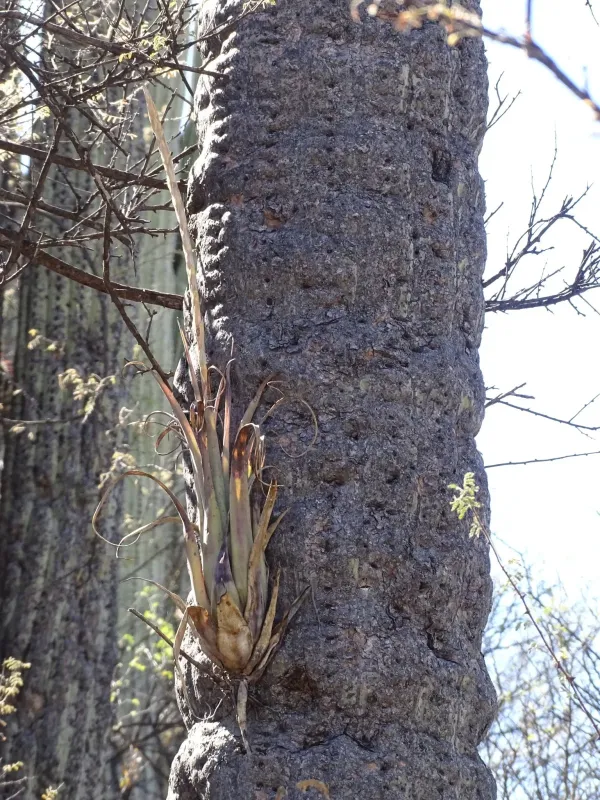
Description
Growing requirements
Tillandsia califani is a unique species belonging to the Bromeliaceae family, specifically classified as an atmospheric epiphyte. Originating from the tropical forests of Central America, this plant is naturally adapted to grow on tree branches rather than in soil, utilizing its specialized leaf trichomes to absorb moisture and nutrients from the air.
For successful cultivation, the environment must maintain high relative humidity levels, ideally between 60% and 80%. As an air plant, Tillandsia califani requires excellent air circulation to ensure that its foliage dries completely within a few hours after watering, preventing the risk of internal rotting.
Temperature requirements for this species are relatively moderate, ranging from 20°C to 25°C. It is sensitive to extreme cold and excessive heat, so keeping it away from drafty windows or direct heat sources is essential for its overall health and vitality.
Bright, indirect light is the preferred lighting condition for this species. While it enjoys a good amount of luminosity, direct exposure to harsh midday sun can quickly scorch the delicate scales and tissue of the leaves, potentially leading to irreversible damage.
Watering is best achieved through misting or by soaking the entire plant in room-temperature, filtered water for about 15 minutes. It is vital to shake off excess water from the center of the leaf rosette after soaking to avoid trapped moisture, which is the primary cause of plant death in cultivation.
Main diseases and pests
Fungal infections are the most dangerous threats to Tillandsia califani, typically manifesting as soft, brown spots on the base of the leaves. These infections spread rapidly in stagnant, humid environments where the plant cannot adequately dry out after exposure to moisture.
Pests such as mealybugs often congregate in the tight crevices of the leaves, making them difficult to detect and treat. Their presence can severely weaken the plant by extracting cell sap, often leading to secondary infections or the spread of viral pathogens through the leaf tissue.
Scale insects can also infest the plant, creating physical barriers that interfere with the absorption of atmospheric water. Removing them requires gentle manual cleaning combined with an appropriate organic insecticide, as Tillandsia species can be quite sensitive to strong chemical formulations.
Salt accumulation from hard water is a silent killer for epiphytes. Over time, mineral deposits clog the trichomes, preventing the plant from "breathing" and hydrating efficiently, which causes the foliage to lose its silvery-green hue and eventually wither away.
Preventative maintenance includes regular check-ups for signs of distress and keeping the plant in a location with steady airflow. Applying a light, diluted fertilizer specifically formulated for bromeliads once a month during the growing season can help the plant build natural defenses against environmental stressors.