
Tillandsia brachycaulos
Tillandsia brachycaulos
Description
Growing requirements
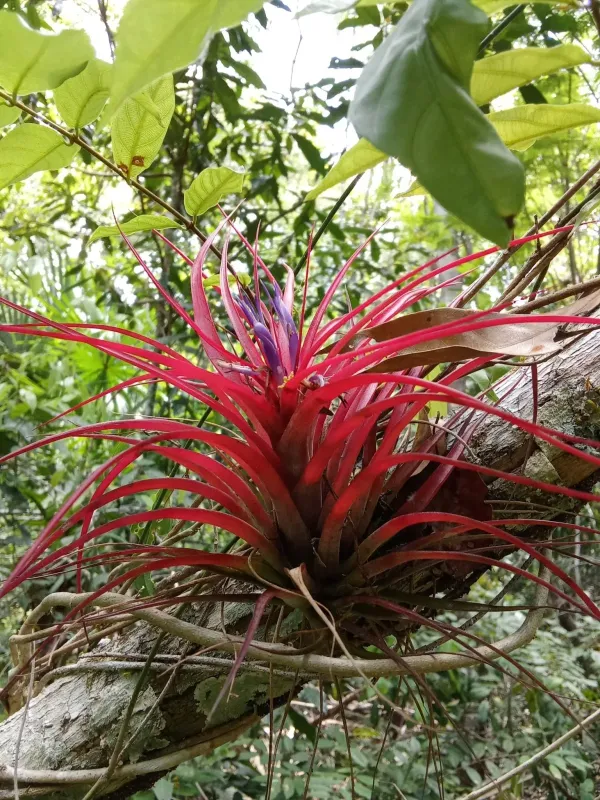
Tillandsia brachycaulos is a distinctive member of the Bromeliad family (Bromeliaceae). It is an obligate epiphyte native to the tropical forests of Mexico and Central America, where it thrives by anchoring itself to tree branches rather than soil.
The plant exhibits unique physiological adaptations, primarily the use of trichomes — specialized leaf scales that absorb water and nutrients directly from the air. This structure allows the species to survive in environments where soil nutrients are inaccessible.
To cultivate Tillandsia brachycaulos successfully, growers must maintain high humidity levels (60% to 80%) and stable temperatures between 20°C and 25°C. Air circulation is paramount to mimic the natural breezy forest environment and prevent water accumulation.
Agronomic management requires consistent misting or soaking with mineral-free, soft water. Hard water can clog the trichomes, effectively choking the plant and preventing it from absorbing the essential moisture needed for healthy development.
Exposure to bright, indirect sunlight is crucial for triggering the plant's natural color transformation. As the plant matures towards its blooming cycle, the foliage turns a deep, vibrant red, which is a hallmark trait highly sought after in the commercial nursery trade.
Main diseases and pests
The most significant threat to this species is fungal and bacterial rot, typically occurring when water settles in the central rosette for too long. If the plant does not dry within a few hours, the tissue begins to decay rapidly.
Mealybugs and scale insects are the primary pests that infest this crop. They tend to settle in the tight spaces between leaves, making mechanical removal difficult. Early detection is essential to prevent widespread damage within the greenhouse.
Low humidity levels may invite spider mite infestations, which manifest as stippling on the leaves and stunted growth. Maintaining a clean and adequately humid environment is the primary cultural control method for these pests.
Chemical control should be approached with caution. Many standard pesticides contain surfactants or heavy additives that can damage the delicate trichome structure, essentially disabling the plant's ability to "breathe" and hydrate.
Successful management relies on constant monitoring and strict adherence to irrigation protocols. Quarantine measures for new arrivals are strictly recommended to prevent the introduction of pests to established collections.