
Tillandsia bermejoensis
Tillandsia bermejoensis
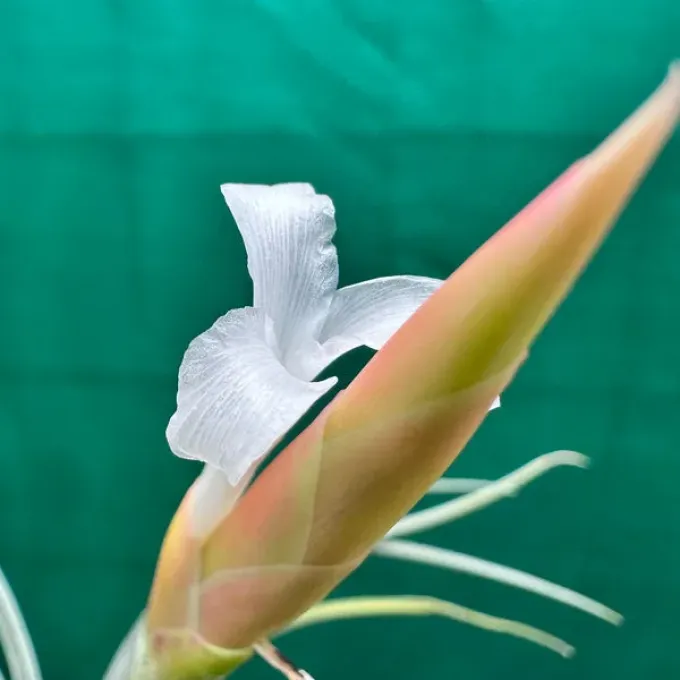
Description
Growing requirements
Tillandsia bermejoensis is a captivating species belonging to the Bromeliad family (Bromeliaceae). As an epiphytic plant native to the South American regions near the Bermejo River, it has evolved to thrive in high-altitude environments, clinging to rocky surfaces or trees.
The botanical structure of this species is highly specialized. The entire plant is covered in microscopic scales known as trichomes, which are essential for absorbing moisture and nutrients directly from the air, eliminating the need for traditional soil-based root systems.
Regarding climate requirements, this plant demands bright, indirect light to maintain its structural integrity and distinct silvery appearance. Proper air circulation is mandatory; without it, the plant is prone to fungal infections and rapid decay, especially in the core of its rosette.
Temperature management should mimic its native mountain habitat. It prefers moderate conditions with a significant drop at night. Keeping the plant in a room where temperatures range from 18 to 25 degrees Celsius is ideal for active growth cycles.
Agricultural maintenance involves misting the plant with soft or distilled water. It is crucial to avoid tap water high in mineral content, as salts can clog the trichomes, preventing the plant from photosynthesizing and absorbing humidity effectively.
Main diseases and pests
The most significant threats to Tillandsia bermejoensis are related to moisture management. Overwatering, particularly allowing water to linger between the leaves for extended periods, inevitably leads to root and crown rot, which is often fatal.
Pests such as mealybugs and spider mites are frequent invaders, especially when the plant is kept in low-humidity environments. They cluster at the base of the leaves, drawing sap and weakening the plant's defense mechanisms against diseases.
To combat infestations, growers should utilize gentle, non-toxic insecticides. Mechanical removal is also a viable option for early-stage infestations, using a soft brush dipped in a mild soapy solution to clean the leaf surfaces.
Bacterial spots can appear if the plant is kept in cool, damp conditions for too long. These spots manifest as dark, mushy patches on the foliage. The affected tissue should be removed immediately to stop the spread to healthy parts of the plant.
Maintaining a high standard of cleanliness and monitoring the plant's vigor is essential. A healthy plant will exhibit stiff, succulent leaves with a dense coating of trichomes, serving as a biological indicator of proper care.