
Tillandsia bergeri
Tillandsia bergeri
Description
Growing requirements
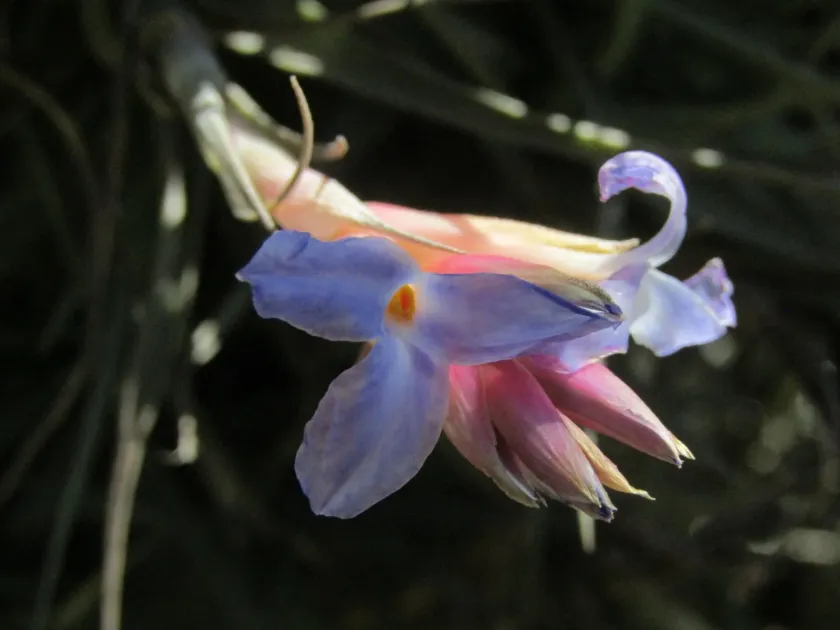
Tillandsia bergeri is a perennial epiphytic plant belonging to the Bromeliaceae family. Native to Argentina, this species naturally inhabits tree branches and rocky outcrops, where it survives as an air plant, relying on its specialized morphology rather than soil roots to thrive.
The botanical structure of this plant features slender, silver-grey leaves densely covered in trichomes. These hair-like scales act as a highly efficient mechanism to absorb water, dust, and minerals from the surrounding atmosphere, which constitutes the plant's primary source of nutrients.
Cultivation requirements involve providing bright, indirect light throughout the day. While these plants appreciate sunlight, intense direct exposure should be strictly avoided to prevent tissue damage and dehydration of the delicate foliage.
Temperature management is crucial, with the plant performing best in a range between 18 and 25 degrees Celsius. Good air circulation is essential, as the plant must dry out within a few hours after moisture application to prevent metabolic stress and tissue decay.
The primary agricultural and decorative use of Tillandsia bergeri is in the ornamental plant industry. It is widely favored for modern biophilic design, vertical gardens, and terrariums, valued for its hardiness and the ability to form dense, attractive silver-green clumps over time.
Main diseases and pests
The most significant threats to the health of Tillandsia bergeri are related to stagnant moisture and poor ventilation. Excessive water trapped in the leaf rosette leads to fungal infections and crown rot, which can rapidly deteriorate the plant's structural integrity.
Pest issues usually involve scale insects and mealybugs, which tend to congregate in the protected areas between the leaves. Regular inspection and targeted application of horticultural oils or systemic insecticides are recommended to maintain plant health and vigor.