
Tillandsia baileyi
Tillandsia baileyi
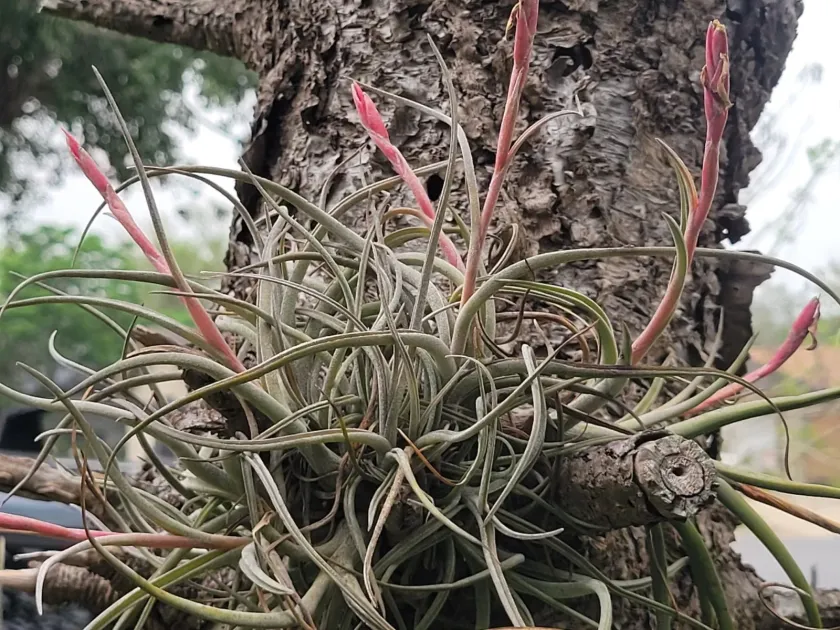
Description
Growing requirements
Tillandsia baileyi is a distinctive species belonging to the Bromeliaceae family, categorized as an atmospheric epiphyte. This plant grows naturally without any soil, anchoring itself onto tree branches and extracting moisture and nutrients directly from the air through specialized structures called trichomes.
Its native habitat ranges from southern Texas in the United States down through northern and eastern Mexico. The species is highly adapted to arid and semi-arid forest environments, where it survives by utilizing its silver-colored foliage to reflect harsh sunlight and minimize water evaporation.
The plant is botanically identified by its pseudobulbous base, which is formed by tightly overlapping leaf sheaths. This bulb-like structure acts as a water reservoir. The leaves are covered in dense scales that facilitate the absorption of atmospheric moisture, allowing the plant to thrive in regions with periodic rainfall.
Cultivation requirements focus on mimicking its natural environment. It prefers bright, indirect light and excellent air ventilation. Watering should be done through regular misting or brief submersion, followed by thorough drying to ensure that no water remains trapped in the central base to prevent rot.
The agricultural and ornamental use of this plant is primarily for decorative purposes. It is a prized specimen in xeriscaping and interior design, often used in floating arrangements or mounted displays where traditional potting media is not feasible, showcasing its unique architectural form.
Main diseases and pests
The most significant threat to the health of Tillandsia baileyi is improper moisture management. If water is allowed to pool in the leaf axils for extended periods, it frequently leads to rapid decay and fungal rot, which can destroy the structural integrity of the pseudobulb within a very short timeframe.
Common pests that target this culture include mealybugs, which are notoriously difficult to control due to their tendency to hide deep within the dense leaf cluster. Their feeding habits cause stunted growth and can attract secondary fungal infections if the plant's health is already compromised.
Scale insects are another potential issue, creating small, hard bumps on the leaf surface. These pests feed on plant sap and can weaken the specimen if left unchecked. Physical removal using a soft brush combined with mild horticultural soap or systemic treatment is recommended for control.
Spider mites are common intruders, particularly in indoor environments with low humidity levels during the winter. These pests create fine webs between leaves and cause discoloration. Maintaining adequate ambient humidity and good airflow is the best preventative strategy against these infestations.
Disease prevention relies heavily on good sanitation and appropriate lighting. Avoid over-fertilizing, as excessive growth can weaken the plant's natural resistance. Ensure that the plant is completely dry within a few hours of watering to discourage the growth of pathogenic bacteria and mold.