
Tillandsia argentea
Tillandsia argentea
Description
Growing requirements
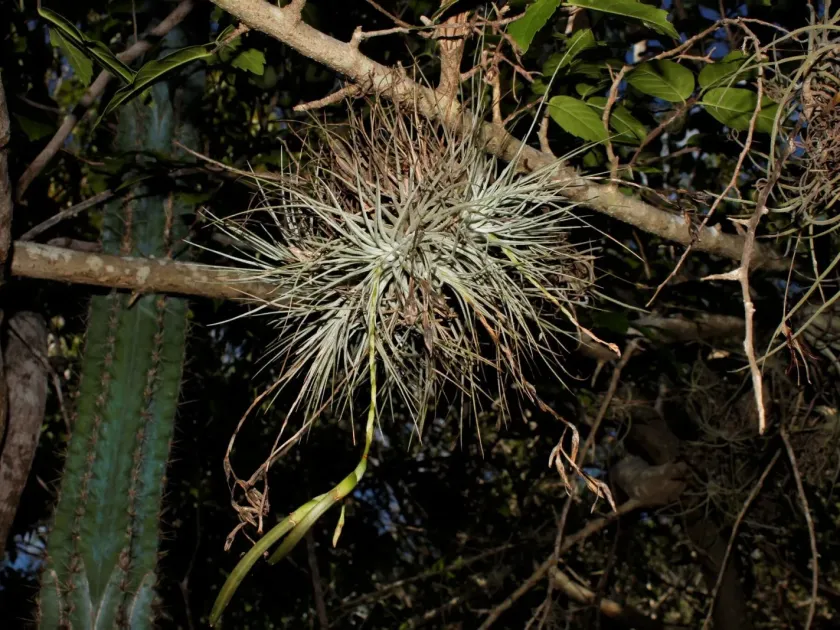
Tillandsia argentea is a fascinating species of epiphytic plant belonging to the Bromeliaceae family. Native to the tropical regions of the Americas, this plant naturally thrives by anchoring itself to tree branches or rocky substrates rather than growing in traditional soil media.
The botanical structure of the plant is defined by a dense rosette of thin, needle-like leaves covered in silvery trichomes. These specialized structures are essential for the plant's survival as they absorb moisture and essential nutrients directly from the surrounding air and precipitation.
To cultivate Tillandsia argentea successfully, it requires bright, indirect sunlight. Exposure to harsh, direct sunlight can damage the sensitive leaf tissue and destroy the protective layer of scales, whereas low light levels will result in stunted growth and loss of vigor.
Temperature management is critical for the healthy development of this crop. The ideal range is between 18 and 26 degrees Celsius. Sudden drops or spikes in temperature, as well as cold drafts, should be strictly avoided to ensure the physiological stability of the plant.
Watering techniques for this species are unique because they rely on misting or total submersion in water. Since the roots are only used for physical anchorage, they should never be placed in moist soil, as this will lead to rapid decay of the basal part of the plant.
Main diseases and pests
The most significant threat to Tillandsia argentea is waterlogging, specifically the accumulation of liquid in the center of the rosette. If moisture remains trapped in the core for too long, it triggers rapid fungal rot, which is often fatal to the plant.
Common pests include mealybugs and spider mites, which can thrive if the environmental humidity is not perfectly balanced. Frequent inspection of the foliage, particularly near the base of the leaves, is essential to detect and manage these pests before they spread.
Poor air circulation is a primary cause of physiological stress in this species. In cultivation environments, adequate ventilation is required to allow the plant to dry off properly after misting, preventing the growth of mold and mildew on the trichomes.
Nutrient deficiency is another common issue, manifested by a lack of growth or discoloration. Since the plant does not draw nutrients from soil, very diluted specialized bromeliad fertilizers should be applied sparingly through foliar spray during the active growth season.
Inappropriate water quality, particularly water with high mineral content, can clog the trichomes, effectively choking the plant. It is highly recommended to use distilled, rainwater, or deionized water to maintain the health and appearance of the silvery foliage.