
Tillandsia andreana
Tillandsia andreana
Description
Growing requirements
Tillandsia andreana is a distinctive species of the Bromeliaceae family, well-known for its growth as an epiphyte. Unlike conventional crops, it does not rely on soil for nutrient intake, instead utilizing its specialized leaves to absorb moisture and minerals from the air.
Originating from the mountainous regions of Colombia, the plant has adapted to cooler, humid environments. In agricultural and horticultural contexts, it is cultivated primarily for decorative purposes in specialized greenhouse conditions or managed botanical environments.
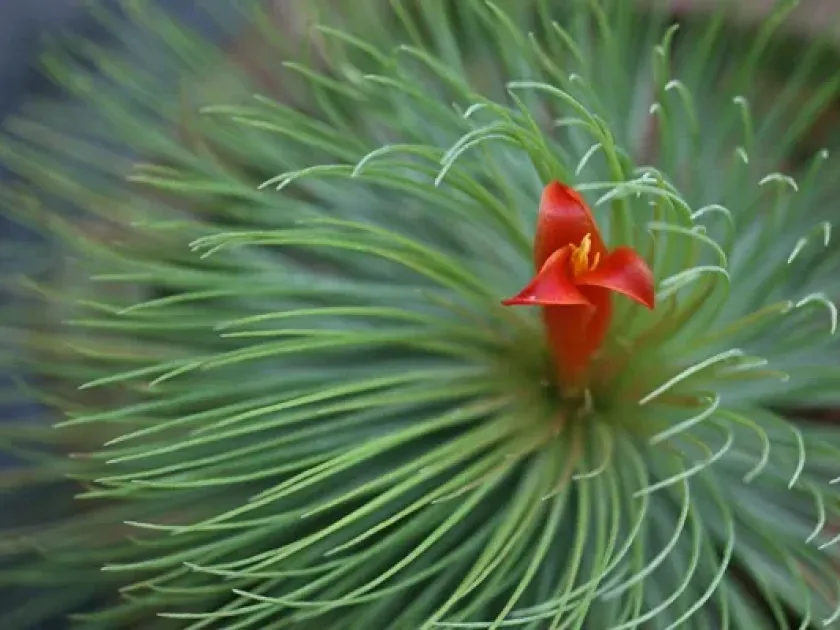
The botanical structure features a dense, compact rosette of fine, silver-green leaves covered with trichomes. These hair-like structures are essential for the plant's survival, functioning as natural sponges that capture atmospheric moisture and atmospheric nutrients.
Optimal environmental requirements include bright, filtered light and a stable temperature range between 18°C and 24°C. Air circulation is paramount; stagnant air significantly increases the risk of physiological disorders and fungal infections in the plant’s core.
Cultural practices involve mounting the plants on organic materials like cork or wood. Fertilizer application should be minimal, using highly diluted specialized bromeliad nutrients, as the plant is sensitive to the accumulation of salts from fertilizers or poor-quality water.
Main diseases and pests
The primary threat to Tillandsia andreana is fungal rot, specifically crown rot caused by excess water accumulation in the rosette. If moisture remains trapped in the center for too long, the tissues begin to decay rapidly, often leading to the death of the plant.
Pest management is focused on controlling mealybugs and scale insects. These pests often congregate in the base of the leaves, drawing sap and weakening the plant's structure. Regular physical inspection of the foliage is necessary to detect early-stage infestations.
Spider mites can also be a significant issue in low-humidity environments. They cause stippling on the leaves and can lead to severe structural damage if not addressed. Proper humidity levels and airflow help keep mite populations at bay.
Chemical control must be applied with care, avoiding oils or heavy solvents that can clog the trichomes and interfere with the plant’s gas exchange. Systemic insecticides are preferred, provided they are labeled safe for bromeliad species.
Overall, maintaining proper plant hygiene through daily monitoring and strict adherence to drying cycles is the most effective defense strategy. Preventive measures, such as thorough washing of the foliage during high-risk seasons, contribute to long-term health.