
Tillandsia albertiana
Tillandsia albertiana
Description
Growing requirements
Tillandsia albertiana is a charming species of the Bromeliaceae family, native to the rocky landscapes of Argentina. As a specialized epiphyte, it has evolved to thrive in environments where traditional soil cultivation is impossible, attaching itself to rocks or branches.
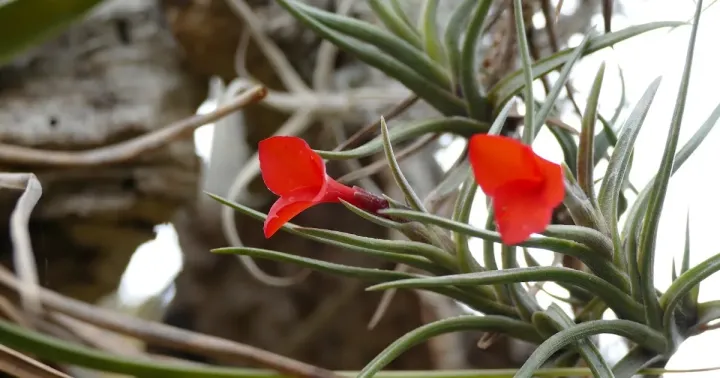
The plant features thin, creeping stems adorned with silver, trichome-covered leaves. These silver scales are highly specialized organs that capture moisture and mineral particles from the atmosphere, making it a highly efficient plant in arid mountain habitats.
Cultivation requires bright, filtered light to ensure the plant maintains its structural integrity and vibrant color. If placed in a shaded area, the plant becomes leggy and significantly decreases its chances of producing its striking, bright red, tubular flowers.
Temperature management should mimic its native habitat with moderate days and cool nights. Good ventilation is perhaps the most critical factor in its management; the plant must dry out completely within a few hours after being misted to prevent tissue decay and fungal outbreaks.
Watering is conducted via misting, ideally using rainwater or demineralized water to avoid mineral buildup. During the growing season, a dilute liquid fertilizer designed for bromeliads can be misted onto the leaves once every two weeks to promote robust growth and flowering.
Main diseases and pests
The primary threats to Tillandsia albertiana include fungal infections resulting from water stagnation. When moisture remains trapped between the tightly packed leaves for too long, the internal tissues start to rot, quickly compromising the plant's vascular system.
Pests are generally limited, but mealybugs and scale insects are the most common invaders. These pests thrive in hidden areas near the base of the stems. If detected, treatment should involve gentle manual removal or the application of insecticidal soap, ensuring that chemicals do not cause leaf burns.