
Tillandsia aizoides
Tillandsia aizoides
Description
Growing requirements
Tillandsia aizoides is a fascinating species belonging to the Bromeliaceae family. As an epiphyte, this plant does not require soil to thrive, as it obtains water and necessary nutrients through its specialized foliage, primarily native to the rugged terrains of Argentina and Bolivia.
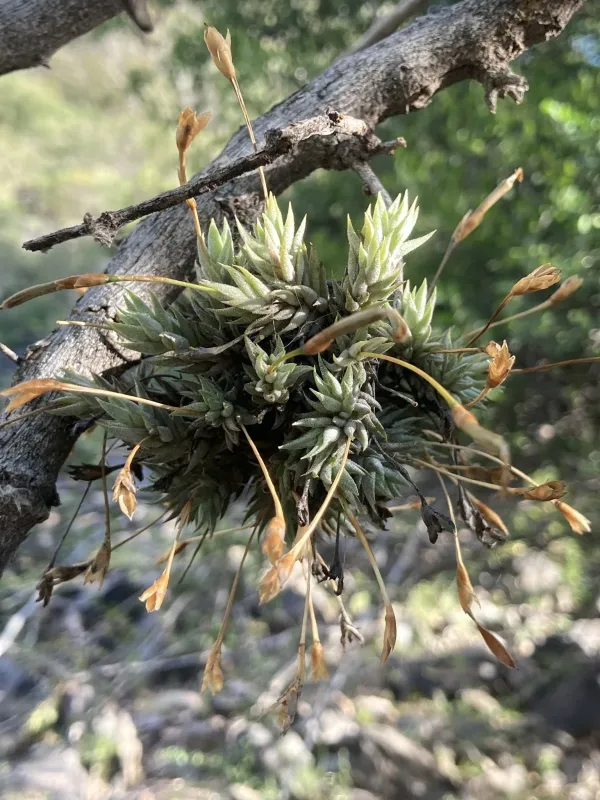
The botanical structure of this plant consists of dense, rigid rosettes of leaves covered in trichomes. These microscopic scales are vital for survival, allowing the plant to absorb moisture directly from fog and atmospheric humidity in its high-altitude habitat.
In cultivation, Tillandsia aizoides requires bright, indirect light to maintain its structural integrity and color. Strong direct sunlight can damage the leaves, while insufficient light leads to stunted growth and a loss of the plant's characteristic compact habit.
The irrigation of this crop should be handled through regular misting or periodic soaking in soft water. It is essential to ensure that the plant dries completely within a few hours to prevent water stagnation, which is critical for preventing physiological stress.
Maintaining proper air circulation is just as important as hydration. In an indoor setting, placing the plant on a well-drained mount such as cork bark or a wooden branch helps mimic its natural epiphytic environment, promoting healthy gas exchange through the leaves.
Main diseases and pests
The primary threat to Tillandsia aizoides is rot caused by excessive humidity combined with poor ventilation. If water remains trapped in the center of the rosette for too long, especially in cooler conditions, the base of the plant will quickly succumb to fungal infections.
Pests such as mealybugs represent a significant problem for this species. They settle in the tight spaces between leaves, making them difficult to detect until the plant starts showing signs of yellowing or decreased vitality.
Scale insects can also infest the leaves, feeding on the sap and causing unsightly spots and structural damage. Early detection and the application of mild insecticidal soaps are recommended to control these populations before they spread to other plants.
Spider mites are common in environments where air humidity is chronically low. They thrive in dry conditions and can cause the tips of the leaves to wither and die, significantly reducing the aesthetic and biological value of the specimen.
To keep the plant healthy, a balanced approach is required: monitoring for early symptoms of pests, ensuring proper drying times after watering, and avoiding exposure to extreme cold or dampness during the dormant period.