
Tillandsia aeranthos
Tillandsia aeranthos
Description
Growing requirements
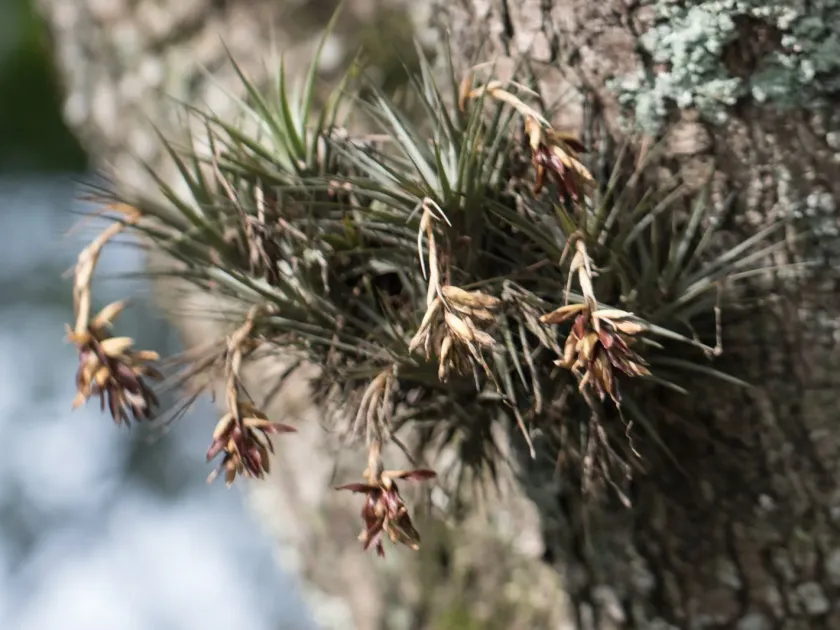
Tillandsia aeranthos is a perennial epiphytic plant belonging to the Bromeliaceae family. Originating from South American regions including Argentina and Brazil, this plant naturally thrives on tree branches and rock faces, relying entirely on atmospheric moisture and nutrients.
The botanical structure consists of compact rosettes featuring narrow, coriaceous leaves covered in silver-colored trichomes. These specialized appendages are essential for the plant's survival, as they function as conduits for water and mineral absorption from the ambient air.
Successful cultivation requires high humidity levels, ideally maintained between 60% and 80%. Proper ventilation is critical to ensure that the plant dries within a few hours after moisture application, preventing the accumulation of water in the leaf axils, which can lead to rapid decay.
The optimal temperature range for development is between +18°C and +24°C. While the species is somewhat resilient, it should be protected from extreme temperature fluctuations and direct cold drafts to maintain vegetative vigor and flowering performance.
Light requirements involve bright, indirect light conditions. In greenhouse production, shade cloths are typically used to filter solar radiation, preventing leaf burn while ensuring sufficient light for photosynthesis and the development of the characteristic pink and blue inflorescences.
Main diseases and pests
Common pests affecting Tillandsia aeranthos include scale insects, mealybugs, and spider mites. These pests typically congregate in the base of the leaves, drawing sap and weakening the structural integrity of the plant rosette over time.
Pathogenic threats are primarily linked to fungal infections and soft rot caused by poor environmental management. If the plant remains saturated for too long in a stagnant air environment, bacterial colonization of the internal tissues becomes inevitable, necessitating strict humidity control.