
Bromelia pinguin
Bromelia pinguin
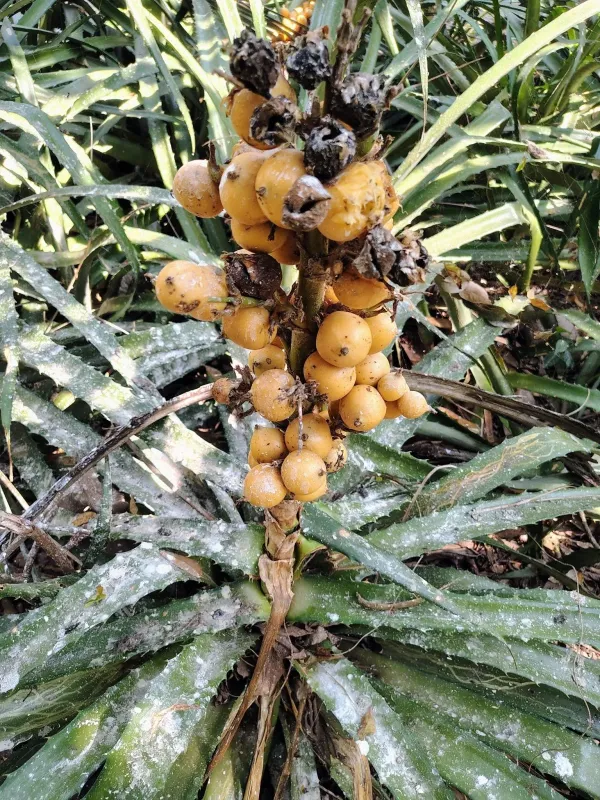
Description
Growing requirements
Bromelia pinguin is a perennial herbaceous plant belonging to the Bromeliaceae family. It is native to tropical environments across Central and South America, as well as the Caribbean islands.
The plant thrives in well-drained soils, including sandy and rocky substrates where water retention is low. It is highly adapted to arid conditions and requires full sun exposure to achieve optimal growth and fruit production.
Temperature requirements are strictly tropical, as the plant cannot survive frost or prolonged cold exposure. It prefers warm climates with temperatures consistently above 20°C.
Agronomic management often involves establishing the crop in rows to form impenetrable hedges. The sharp, serrated spines on the leaves make it an excellent natural fencing option for livestock exclusion.
Propagation is primarily carried out through vegetative offsets produced at the base of the plant after the main flowering phase, ensuring quick plantation expansion.
Yield
The economic utility of Bromelia pinguin lies in its dual output: the durable leaf fibers and its edible fruit clusters.
The plant's leaves contain long, strong fibers that have historically been utilized for making cords, ropes, and various textiles due to their resistance to environmental decay.
The fruit, borne in dense heads, is appreciated for its acidic properties. It is commonly processed into refreshing beverages and traditional preserves throughout its range of cultivation.
Modern applications include the extraction of the enzyme pinguinain, which acts as a natural meat tenderizer and is studied for pharmacological potential.
Total yields depend on the density of the plantation and the soil quality, but the crop is generally low-maintenance compared to other fiber-producing plants.
Main diseases and pests
Bromelia pinguin is naturally resilient to many common pests, largely due to its tough, leathery, and spiny leaf structure that deters most herbivores.
Root rot is the most significant threat to the crop, typically triggered by waterlogging or poor drainage in the plantation area.
Fungal diseases can occur under conditions of extremely high humidity if air circulation between plants is insufficient, leading to leaf spots or decay.
Mealybugs are the most prevalent insect pests, often found in the leaf axils where they feed on sap, which may necessitate targeted control if outbreaks occur.
Preventive strategies include proper site selection for drainage and maintaining optimal spacing to ensure good ventilation throughout the growing season.