
Bromelia humilis
Bromelia humilis
Description
Growing requirements
Bromelia humilis is a succulent-like species within the Bromeliaceae family, native to tropical regions of South America. It typically grows in rocky, sun-exposed environments, which has shaped its drought-tolerant and highly resilient nature.
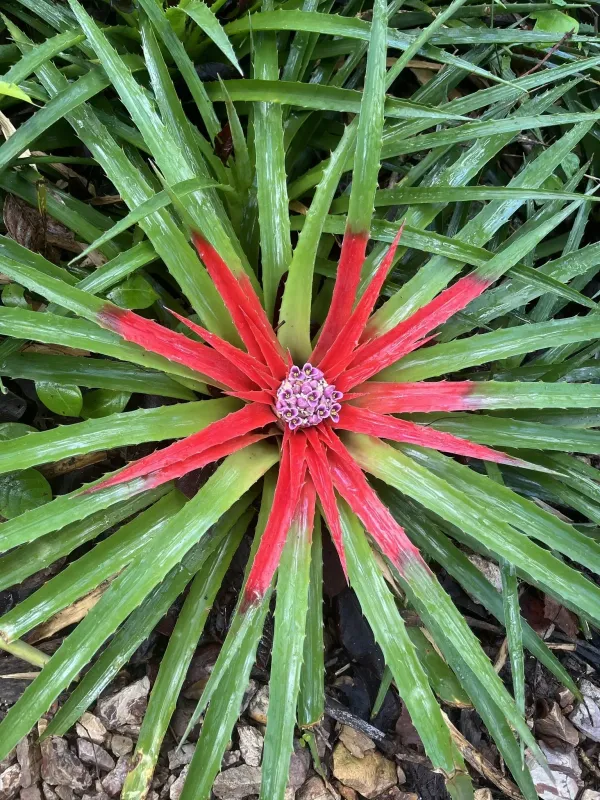
The plant features a tight rosette of stiff, spine-edged leaves that help conserve moisture. Its central inflorescence is protected by brightly colored bracts, making it a distinct and visually appealing specimen in both natural landscapes and botanical collections.
The cultural requirements for Bromelia humilis focus on high light exposure. Without sufficient sunlight, the plant will lose its compact shape and vibrant coloration, leading to weak growth. Full sun or very bright indirect light is necessary for the plant to thrive.
A well-draining substrate is mandatory for this species. A mixture of orchid bark, perlite, and a small amount of peat moss creates the ideal balance between moisture retention and aeration, mimicking its natural epiphytic or rock-dwelling environment.
Temperature management should prioritize warmth, avoiding prolonged exposure below 15 degrees Celsius. Irrigation should be applied carefully; water should not be allowed to stand in the rosette for extended periods to prevent bacterial rot during cooler or cloudy cycles.
Main diseases and pests
Mealybugs are a common pest for Bromelia humilis, frequently hiding in the dense leaf bases where they are protected from topical treatments. Regular inspections are necessary to catch infestations early before they spread across the entire rosette.
Scale insects often attach themselves to the stiff leaves, appearing as small brown bumps. They feed on plant sap and secrete honeydew, which can encourage the growth of sooty mold, negatively affecting the plant's aesthetic and physiological health.
Root rot is the most significant threat to the survival of this species. It is almost exclusively caused by overwatering or poor drainage in the container. Once root health is compromised, recovery is difficult and often requires aggressive pruning of affected areas.
Fungal leaf spot can occur if humidity levels are too high combined with poor air circulation. These spots can rapidly compromise the integrity of the leaves, necessitating the removal of the infected tissue and an improvement in ventilation around the plant.
Spider mites can become problematic in low-humidity environments, especially when the plant is kept in dry, heated indoor conditions. Maintaining adequate humidity and consistent cleaning of the leaf surfaces can help prevent outbreaks of these tiny pests.