
Bromelia agavifolia
Bromelia agavifolia
Description
Growing requirements
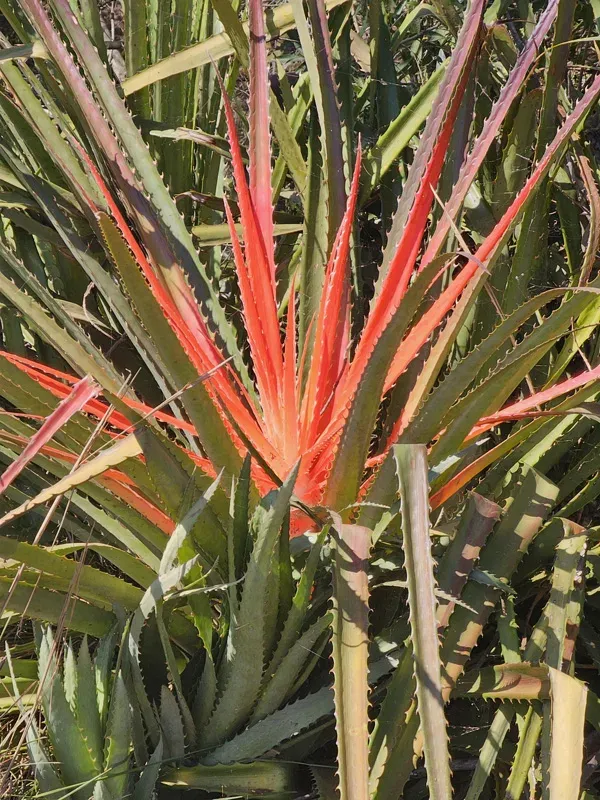
Bromelia agavifolia is a perennial herbaceous plant belonging to the Bromeliaceae family, native to the tropical regions of South America. It is characterized by its robust, agave-like rosette structure.
The plant thrives in well-drained, sandy or gravelly soils that prevent moisture accumulation around the root system. High air circulation is vital for healthy development.
Regarding climatic requirements, the plant demands consistent tropical temperatures and abundant direct sunlight throughout the year to ensure optimal fiber accumulation.
Agronomic management requires careful spacing to accommodate the wide leaf rosettes and to facilitate mechanical maintenance or manual harvesting during the season.
The plant demonstrates high efficiency in nutrient uptake from poor soils, making it a viable crop for regions with limited soil fertility, provided that water drainage is strictly controlled.
Main diseases and pests
The most significant threats to Bromelia agavifolia are root rot and crown rot, primarily induced by over-irrigation or stagnant water conditions within the leaf rosette.
Pests such as mealybugs and scale insects often pose a threat by colonizing the leaf bases, where they thrive in protected, humid microclimates.
Fungal leaf spot diseases may appear during periods of high humidity and poor ventilation, which can degrade the quality of the harvested leaf fiber significantly.
Preventative measures include maintaining proper row spacing to encourage airflow and avoiding mechanical damage to the leaves that would allow pathogens to enter.
Routine inspection of the central rosettes is essential to detect early infestations and implement targeted control measures before the pests reach economic thresholds.
Harvesting
Bromelia agavifolia is primarily cultivated for its high-quality fibers extracted from the long, tough leaves, which possess excellent tensile strength for industrial applications.
Harvesting is typically performed by cutting mature, outer leaves, ensuring the central growth point remains intact to allow for continued productivity of the plant.
The post-harvest process involves decortication, which consists of crushing and scraping the leaves to separate the long, durable vascular bundles from the softer parenchyma tissue.
The extracted fibers are then thoroughly washed to remove impurities and sap, followed by sun-drying to achieve the desired moisture content for storage and processing.
This fiber is widely valued in the manufacturing of specialty ropes, high-tensile cords, and traditional textiles due to its exceptional resistance to degradation.