
Wax begonia
Begonia semperflorens
Description
Sowing dates
Wax begonia seeds should be sown indoors in January or February due to their slow initial growth rate. It is recommended to use sterile, fine-textured soil media to ensure uniform germination.
Seeds are tiny and light-sensitive, so they should be sown on the surface of the soil without covering. Maintaining high humidity and a temperature of 22–24 °C is critical during this stage.
Seedlings require transplanting into cell trays or pots once they develop their first set of true leaves. Proper spacing ensures adequate air circulation and reduces the risk of damping-off.
As a member of the Begoniaceae family, this species is treated as an annual in cooler regions, although it is a perennial plant in its natural tropical habitat.
The native range of the plant is Brazil, which dictates its preference for consistently warm environments and high-quality moisture management throughout the growing season.
Growing requirements
The plant thrives in well-drained, nutrient-rich soil with a slightly acidic pH. It performs well in both sunny and partially shaded locations, making it versatile for landscaping.
Regular watering is necessary, but the soil should be allowed to dry slightly between waterings to prevent root rot. Supplemental feeding with balanced liquid fertilizer promotes continuous blooming.
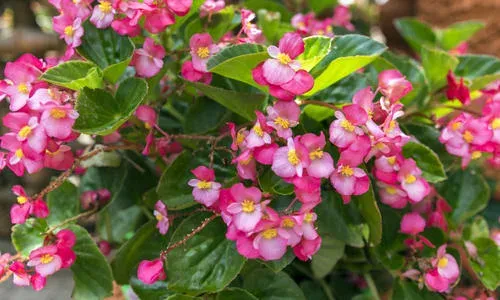
Botanically, it features succulent stems and shiny, asymmetrical foliage that ranges in color from light green to dark bronze. The plant typically reaches a height of 15 to 30 cm.
Blooms are available in a range of white, pink, and red shades. The term "semperflorens" refers to the plant's remarkable ability to bloom continuously until the first frosts.
It is widely used for mass bedding, borders, and window boxes due to its compact habit, resilience, and excellent performance in various climate conditions.
Main diseases and pests
Common pests affecting wax begonia include aphids, whiteflies, and spider mites, which can cause significant damage to the leaves and stunted growth if not managed.
Fungal diseases such as powdery mildew and Botrytis (gray mold) are prevalent, especially in conditions with poor air circulation or excessive moisture.
Bacterial leaf spot can also occur under high-humidity conditions, causing unsightly lesions on the foliage that can spread rapidly through the planting bed.
Integrated pest management, including regular inspection and the use of appropriate fungicides or insecticides, is essential for maintaining plant health.
Sanitation practices, such as removing debris and ensuring proper plant spacing, are fundamental to preventing the outbreak and spread of diseases in the greenhouse or landscape.