
Carolina leaf begonia
Begonia carolineifolia
Description
Growing requirements
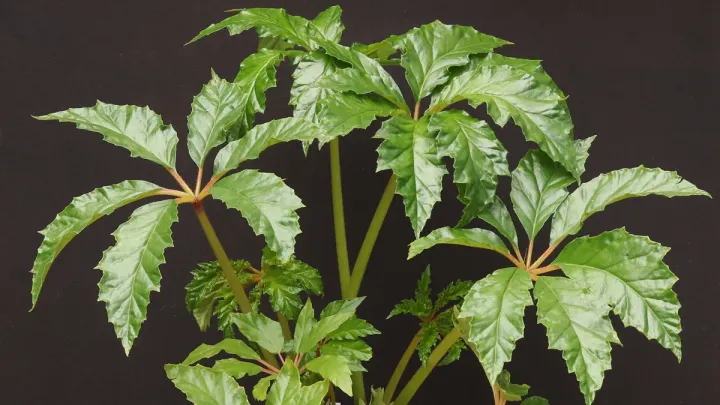
Carolina leaf begonia (Begonia carolineifolia) is a fascinating species from the Begoniaceae family, native to the tropical forests of Mexico. It is distinct due to its thick, rhizomatous stem and uniquely divided palm-like leaves, which distinguish it from many other common begonia varieties.
Cultivation requires bright, indirect light to maintain leaf coloration and structure. Exposure to harsh, direct sunlight will lead to leaf scorching, while insufficient light may cause the plant to become leggy and lose its architectural appeal.
The plant thrives in a warm environment with temperatures ideally ranging from 18 to 24 degrees Celsius. It requires high ambient humidity but should not be exposed to stagnant air, as this can encourage fungal development.
Soil requirements focus on excellent drainage and aeration. A mix of peat, perlite, and coarse sand provides the necessary environment for the rhizomes to grow without the risk of waterlogging, which is a common cause of failure in this species.
Nutrient management involves regular, diluted fertilization during the growing season. A balanced, water-soluble fertilizer is usually sufficient to support the lush growth of its decorative foliage throughout the year.
Main diseases and pests
The primary threats to this plant involve various fungal infections such as powdery mildew and grey mold, typically triggered by improper irrigation and poor air circulation in the growing space.
Pest pressures primarily come from spider mites, aphids, and mealybugs. These insects can quickly overwhelm the plant if not detected during early stages of infestation.
Effective management includes maintaining a dry environment around the leaves while ensuring the root zone remains consistently hydrated but not saturated.
Regular inspection of the plant, especially near the base of the stems and the undersides of the leaves, is essential to ensure early detection of any biological threats.
Cultural control methods, such as removing dead leaves and keeping the growing area clean, significantly reduce the necessity for chemical intervention in the nursery or home environment.