
Begonia radicans
Begonia radicans
Description
Growing requirements
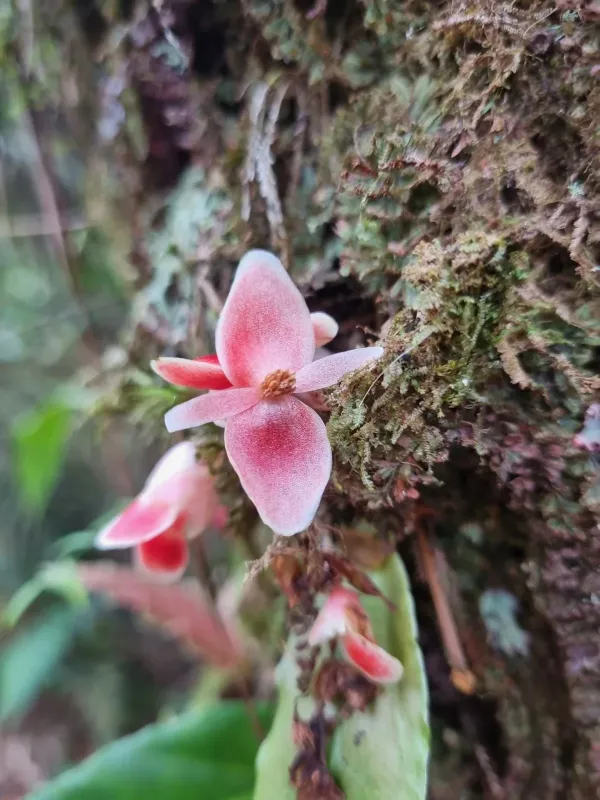
Begonia radicans is a species of flowering plant within the Begoniaceae family, native to the tropical regions of Brazil. Known for its distinct creeping habit, it often behaves as an epiphyte in its natural habitat, using its roots to anchor itself onto the bark of forest trees.
The plant features elongated, asymmetrical leaves that provide a lush, dark green appearance. Its stems possess the ability to root at the nodes whenever they come into contact with moist organic matter, making it an excellent candidate for ground cover in terrariums or specialized indoor plant displays.
Regarding climate, this species thrives in stable, warm conditions with high ambient humidity. It is sensitive to extreme temperature fluctuations and prefers a location that provides bright, indirect light to maintain its vibrant leaf coloration without the risk of scorching.
The substrate must be porous and well-draining to prevent the roots from suffocating. A mixture containing peat moss, pine bark, and perlite is often recommended to replicate the airy, nutrient-rich environment found in the canopy of its native rainforest.
Watering management is crucial; the soil should remain consistently moist but never waterlogged. During the growing season, a balanced liquid fertilizer applied at half-strength can help sustain the plant’s rapid growth and healthy leaf development.
Main diseases and pests
The primary threats to Begonia radicans include various fungal infections, such as Botrytis and powdery mildew, which flourish in stagnant, humid environments. Maintaining adequate air circulation is essential to mitigate these risks and ensure the plant remains healthy.
Insect pests such as spider mites and mealybugs are frequent issues. These pests thrive in dry conditions and can cause significant damage by depleting the plant's resources. Regular inspection of the undersides of the leaves is advised for early detection.
If an infestation occurs, affected areas should be treated with appropriate horticultural oils or insecticidal soaps. It is imperative to isolate the plant from others to prevent the spread of pests and diseases throughout the collection.
Root rot is another common issue resulting from overwatering or poorly drained containers. Once root damage occurs, the plant may lose its turgor pressure and show signs of wilting, even if the soil appears damp.
Proper hygiene is fundamental in cultivation; removing fallen leaves and decaying debris from the base of the plant prevents the accumulation of pathogens. Utilizing clean pots and fresh, sterilized soil during repotting significantly reduces potential future problems.