
Begonia pustulata
Begonia pustulata
Description
Growing requirements
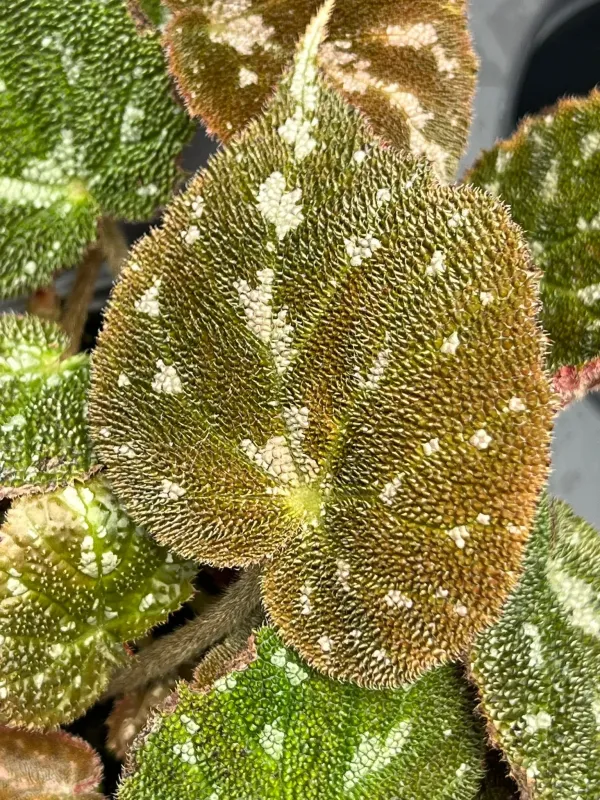
Begonia pustulata is a distinct perennial herbaceous plant belonging to the Begoniaceae family. It is highly regarded by collectors for its unique foliage, characterized by a series of small, raised pustules that give the leaf surface a fascinating textured appearance.
Originating from the tropical rainforests of Mexico, this species is adapted to shaded, high-humidity environments. Cultivating this plant successfully requires a deep understanding of its tropical needs, particularly regarding stable ambient conditions and moisture management.
For optimal growth, the substrate must be light, airy, and nutrient-dense. A standard mixture consisting of peat moss, perlite, and a small portion of decomposed organic matter provides the necessary drainage to protect the delicate root system from waterlogging.
The ideal temperature for Begonia pustulata ranges between 20 and 25 degrees Celsius. It is essential to avoid extreme temperature drops and cold drafts, as these can cause significant physiological stress and lead to rapid leaf drop or dormancy.
This begonia thrives in bright, indirect light. Direct exposure to intense sunlight should be strictly avoided as it will scorch the leaves and destroy their unique texture. Using sheer curtains or LED grow lights can help achieve the perfect light intensity in indoor settings.
Main diseases and pests
The primary threats to Begonia pustulata are fungal pathogens, which thrive in stagnant, overly moist conditions. Powdery mildew and Botrytis (gray mold) are particularly prevalent if airflow is restricted and the humidity remains too high without proper ventilation.
Common pests include spider mites and mealybugs, which are notorious for attacking indoor tropical plants. These pests can cause significant damage to the leaf structure by feeding on cell sap, necessitating early detection and prompt intervention.
Integrated pest management is the most effective approach. This involves a combination of mechanical removal of pests, washing leaves with insecticidal soap, and, in severe cases, the application of targeted systemic insecticides or miticides.
Maintaining a clean environment and regularly dusting the leaves are simple yet vital steps for disease prevention. Ensuring adequate space between individual plants promotes better air circulation, which naturally discourages the growth of fungal spores.
Proper sanitation is key. Always use sterilized pots and fresh substrate when repotting to prevent the introduction of soil-borne pathogens. If symptoms of disease are observed, immediate quarantine is required to prevent the spread to other collections.