
Lotus-leaf begonia
Begonia nelumbiifolia
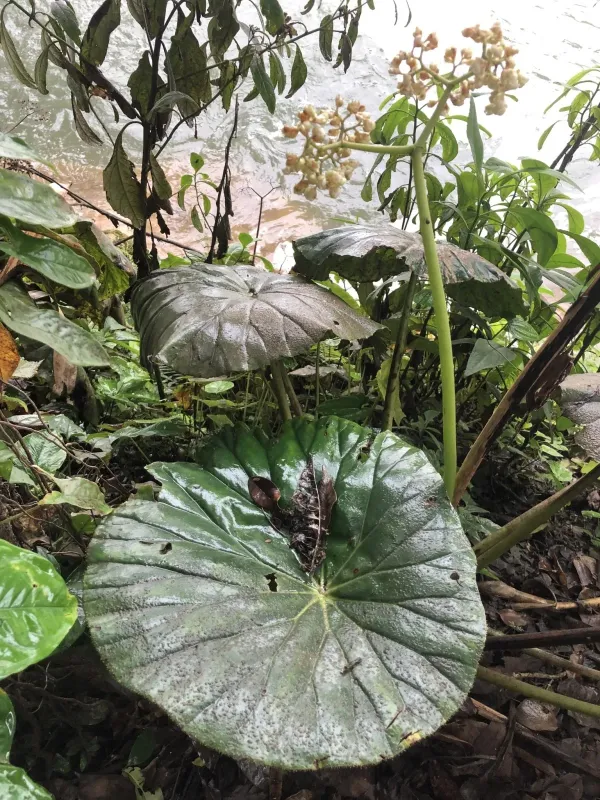
Description
Growing requirements
Lotus-leaf begonia (Begonia nelumbiifolia) is a striking herbaceous perennial belonging to the Begoniaceae family. Native to the lush tropical regions of Central America and Mexico, this species is well-adapted to the understory of dense forests where humidity levels remain consistently high throughout the year.
The plant is defined by its distinctive shield-shaped leaves that resemble those of a lotus, attached peltately to long, sturdy petioles. Its robust, creeping rhizomes allow it to expand effectively in appropriate growing media, making it a favorite for large-scale conservatory displays and botanical exhibitions.
To ensure optimal growth, the species requires an environment with temperatures consistently between 68°F and 77°F. High atmospheric humidity is non-negotiable; therefore, greenhouses or specialized plant cabinets are ideal for maintaining the turgor of its large, thin-textured foliage.
The substrate must prioritize drainage while maintaining moderate moisture levels. A mixture consisting of high-quality peat, perlite, and coarse organic matter is recommended to prevent waterlogging, which the plant's succulent rhizomes are highly susceptible to during the dormant or cooler periods.
In terms of usage, the lotus-leaf begonia serves primarily as an ornamental specimen. Its structural aesthetic and tolerance for lower light conditions make it an excellent choice for interior greening in large commercial spaces or botanical conservatories seeking to replicate a rainforest aesthetic.
Main diseases and pests
The primary pathological threats include fungal pathogens such as Botrytis cinerea (gray mold) and various species of Pythium that attack the root system. Proper air circulation and controlled watering regimes are the primary defenses against these destructive pathogens.
Regarding pest management, growers should monitor for spider mites and mealybugs, which tend to congregate in the protected areas of the petioles. Implementing an Integrated Pest Management (IPM) approach, including mechanical removal and localized applications of appropriate treatments, is essential for maintaining plant health.