
Begonia megaptera
Begonia megaptera
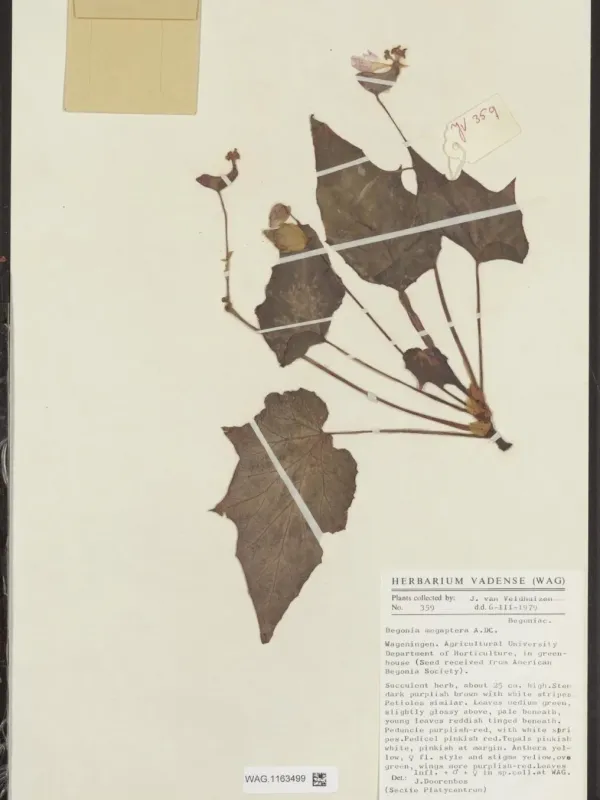
Description
Growing requirements
Begonia megaptera is a perennial herbaceous species within the Begoniaceae family, recognized for its distinctive botanical features. Native to tropical environments, this plant typically thrives in humid, shaded forest understories where it benefits from consistent moisture levels.
Regarding soil requirements, the species performs best in well-draining, nutrient-rich substrates that mimic forest floor conditions. It is crucial to maintain an airy soil structure, as root aeration is a limiting factor for the development of healthy Begonia megaptera specimens.
Environmental conditions must be carefully regulated to ensure success. The species prefers temperatures ranging from 18 to 25 degrees Celsius and is sensitive to sudden cold spells or drafts, which can lead to significant physiological stress for the plant.
Lighting needs are moderate; the plant requires bright, indirect light. Exposure to direct sunlight, especially during peak intensity, can result in leaf scorching and bleaching, which negatively impacts the aesthetic and biological value of the culture.
In a horticultural context, Begonia megaptera is highly prized as an ornamental plant. It is primarily utilized by collectors and conservatory managers who value its unique leaf morphology and growth habits as an addition to diverse botanical displays.
Main diseases and pests
The primary threats to Begonia megaptera include fungal infections such as powdery mildew, which often thrives in stagnant air conditions. Proper ventilation is essential to minimize the risk of spore colonization on foliage.
Root rot, driven by overwatering or poorly draining soil, remains the most frequent cause of mortality in cultivation. It is imperative to allow the substrate to dry slightly between watering cycles to maintain root health.
Pest management is focused on controlling spider mites and aphids, which are common greenhouse threats. These pests can rapidly proliferate, causing leaf distortion and a general decline in the plant's physiological vigor.
Integrated pest management strategies are recommended, combining biological control agents with selective chemical treatments when necessary. Constant monitoring is the most effective way to prevent widespread infestation.
Maintaining high hygiene standards in the growing area, including the removal of dead organic matter and the use of sterile tools, is critical to preventing the spread of diseases within collections of this species.