
Ferocious Begonia
Begonia ferox
Description
Growing requirements
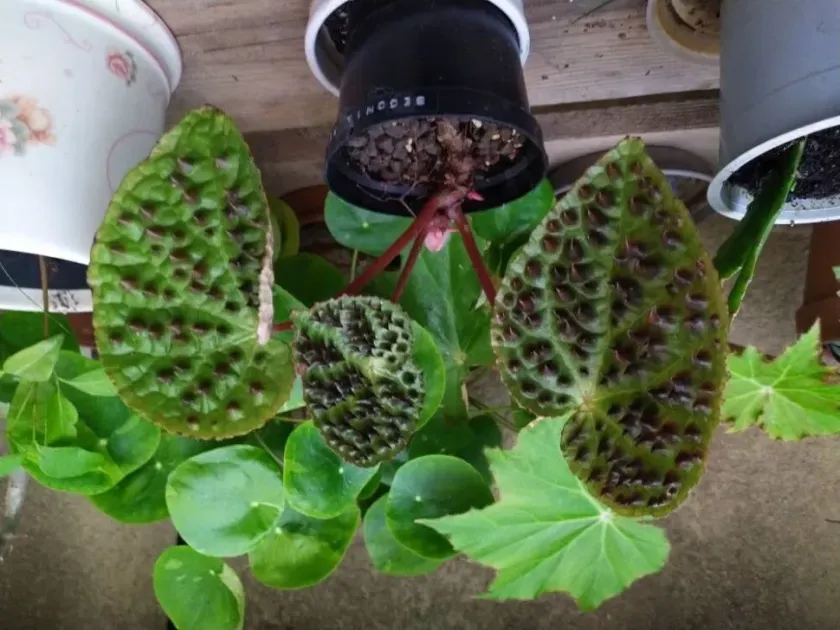
Begonia ferox, known as the Ferocious Begonia, belongs to the Begoniaceae family and is native to the limestone regions of Guangxi, China. It is highly valued by collectors for its dark, bullate leaves covered in striking, thorn-like projections that give the plant its unique appearance.
To thrive in cultivation, this plant requires high environmental humidity, ideally maintained at 70% or higher. It is highly recommended to grow this species within a terrarium or a greenhouse setup where microclimatic conditions can be strictly controlled.
The temperature should remain consistent, ideally between 20 and 25 degrees Celsius. Being a tropical plant, it does not tolerate cold drafts or sudden thermal shocks, which can easily damage its specialized leaf structures and growth points.
The potting medium must be well-draining, airy, and rich in organic matter. A mixture of peat moss, perlite, and bark is generally considered ideal, as it ensures moisture retention while preventing the substrate from becoming waterlogged.
Regarding light requirements, Begonia ferox prefers bright, indirect light. Direct sunlight is dangerous, as it can easily burn the delicate leaf tissues, causing them to turn yellow or brown and potentially leading to the death of the foliage.
Main diseases and pests
Root rot is the most significant threat to the health of the plant, often resulting from improper watering practices. Keeping the substrate constantly saturated prevents oxygen from reaching the roots, causing a rapid decline in plant health.
Powdery mildew often infects the leaves in environments with poor air circulation. This fungal disease creates a fuzzy white layer that inhibits photosynthesis and ruins the plant's aesthetic value, requiring prompt treatment with fungicides.
Spider mites are common pests that thrive in warm, dry air. These microscopic invaders can rapidly cover the undersides of leaves with fine webbing, causing stippling and eventual leaf drop if not managed with regular humidity monitoring.
Mealybugs can also infest the plant, particularly in the leaf axils where the thorns make cleaning difficult. Early detection is essential, as these pests reproduce quickly and can weaken the plant significantly through sap extraction.
Bacterial leaf spot is another concern, often introduced by excessive overhead misting. Because the leaves have a textured surface, water droplets tend to pool, creating an ideal environment for bacterial pathogens to multiply and cause necrotic lesions.