
Cathcart Begonia
Begonia cathcartii
Description
Growing requirements
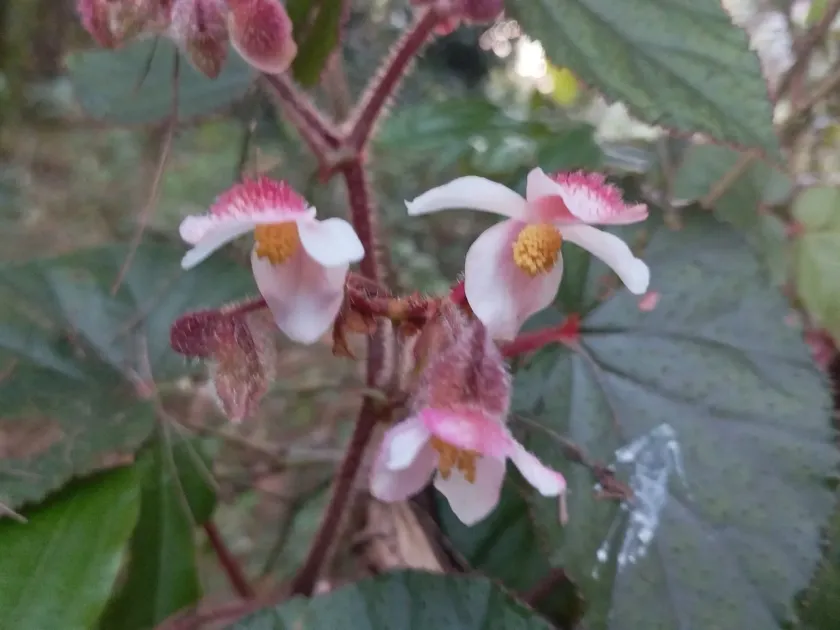
The Cathcart Begonia (Begonia cathcartii) is a unique perennial plant belonging to the Begoniaceae family. It originates from the high-altitude forests of the Eastern Himalayas, naturally thriving in moist, shaded environments.
For successful growth, this plant requires high humidity levels and a stable environment. It is essential to replicate the humid mountain air of its native range to prevent leaf margins from drying out and turning brown.
Climate requirements involve cool to moderate temperatures, strictly avoiding direct intense sunlight which can scorch the foliage. Dappled shade or filtered light is the most appropriate lighting condition for this species.
Soil composition is crucial for Begonia cathcartii. It prefers a porous, well-draining medium rich in organic matter, such as high-quality leaf mold or a specific mix for epiphytic or mountain plants to ensure optimal aeration.
In terms of agricultural use, this species is strictly ornamental, often grown by collectors and botanical gardens. Its delicate structure makes it less suitable for mass production but highly prized for its scientific and aesthetic value.
Main diseases and pests
Common diseases affecting the Cathcart Begonia include fungal issues such as powdery mildew and Botrytis (gray mold). These are often triggered by excessive moisture on leaves and poor air circulation.
Root rot is the most serious threat, typically caused by overwatering or using a medium that is too compact. Preventing this requires careful monitoring of the moisture levels at the root zone.
Pests such as spider mites and whiteflies are prevalent in greenhouse conditions. They thrive in dry air, so maintaining consistent humidity is both a cultural requirement and a method of integrated pest management.
Mealybugs can occasionally infest the stems and leaf axils. Physical removal followed by insecticidal soap application is often sufficient to control these pests in small collections.
Regular sanitation, including the removal of dead or decaying foliage, is a critical step in preventing the spread of diseases and keeping the plant healthy and vigorous throughout the season.