
Begonia albopicta
Begonia albopicta
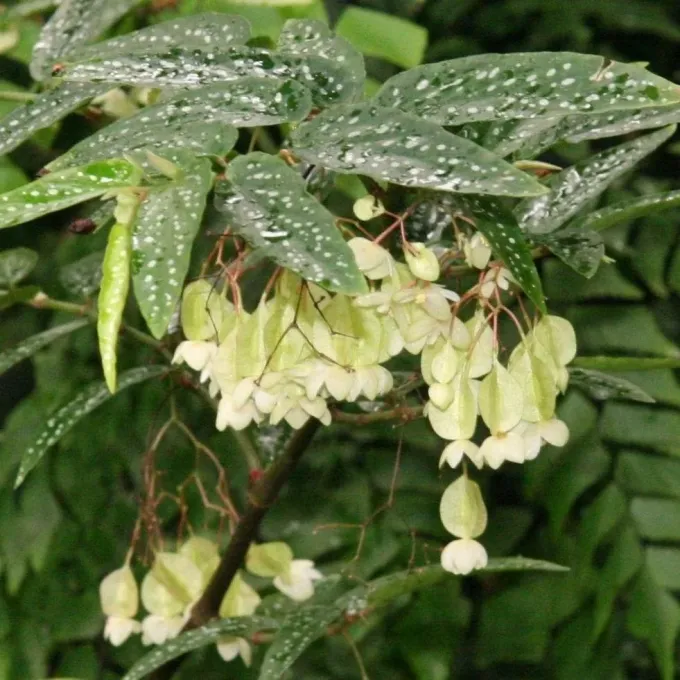
Description
Growing requirements
Begonia albopicta is a perennial species belonging to the Begoniaceae family. It is widely recognized for its elegant, lance-shaped leaves adorned with distinct white spots, which give the plant its name and decorative appeal in both residential and greenhouse environments.
Originating from the tropical regions of Brazil, this plant thrives in warm and humid conditions. The ideal temperature range is between 18 and 24 degrees Celsius, and it is crucial to protect the plant from cold drafts, which can cause significant stress or leaf drop.
Regarding soil requirements, the culture prefers a well-draining, slightly acidic medium. A mixture of peat, perlite, and high-quality potting soil works best to ensure that the roots are adequately aerated and not subjected to waterlogging, which is a common cause of failure.
Light intensity plays a key role in leaf coloration. Bright, indirect light is necessary to maintain the vibrancy of the white spots. Direct exposure to intense sunlight will scorch the foliage, leading to unsightly brown patches and a decline in overall plant health.
Watering should be managed carefully, ensuring the top inch of soil dries out before the next irrigation. During the winter dormancy period, watering frequency should be reduced, as the plant's metabolic rate slows down significantly in response to lower light levels.
Main diseases and pests
Common pests affecting Begonia albopicta include spider mites and mealybugs. These pests are particularly attracted to plants kept in dry air environments, emphasizing the need for regular misting or using a humidifier nearby to discourage their proliferation.
Fungal diseases like powdery mildew are significant threats if air circulation is poor. Once identified, the affected foliage should be treated with appropriate fungicide sprays, and the plant should be moved to a location with better airflow to prevent recurrence.
Root rot, caused by overwatering and poor drainage, is a lethal condition for many begonias. It is often identified by yellowing leaves and a foul smell coming from the soil, requiring immediate repotting and trimming of the compromised root system.
Botrytis, or gray mold, can appear on stems and leaves when temperatures are cool and humidity is high. Maintaining dry foliage and removing dead leaves are the primary cultural methods for preventing this aggressive fungal pathogen.
Regular maintenance, including the removal of spent flowers and damaged leaves, is essential for plant hygiene. Following these practices helps keep the Begonia albopicta healthy and resilient against various abiotic and biotic stress factors.