
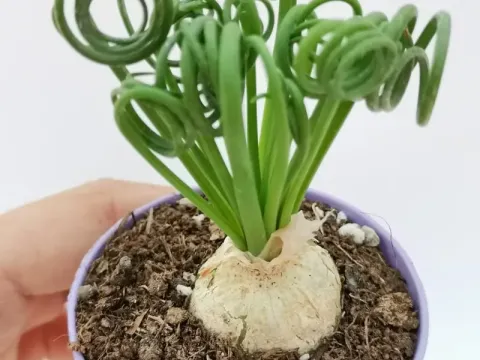
Albuca
Albuca
Albuca is a perennial bulbous plant belonging to the Asparagaceae family. Its natural range primarily encompasses the arid regions of Southern Africa, which defines the specific biological requirements of the culture regarding its growing environment.
What the section contains

Albuca
The plant is characterized by fleshy, often spiral-shaped leaves (especially in the popular Albuca spiralis species) and flower stalks with nodding, bell-shaped flowers that possess a pleasant vanilla-like scent. Botanically, the plant is adapted to long drought periods by storing moisture within its bulb.
Successful cultivation requires a well-drained, sandy soil mix with a neutral to slightly acidic pH. Water stagnation in the root zone is fatal for the bulb, making the inclusion of a high-quality drainage layer in pots or greenhouse beds an essential requirement for the culture.
The crop is highly heliophilic and requires bright, direct light for at least 6–8 hours a day to develop its characteristic spiral leaf shape. Under insufficient light conditions, the stems tend to stretch, lose their aesthetic appeal, and flower stalks may become weak or fail to develop entirely.
Temperature management should mimic Mediterranean or African climates: during the growing season, an optimal range is +20...+25°C, while during the mandatory summer dormancy period, bulbs must be kept in dry conditions at temperatures between +15...+18°C.
The primary physiological enemy of the crop is excessive soil moisture, which triggers the development of basal rot and various types of fungal infections within the root system.
When irrigation protocols are violated, Albuca is susceptible to mealybug infestations, which cluster in leaf axils and around the bulb base, sap-sucking and weakening the plant's natural immunity.
Spider mites may damage leaf surfaces in conditions of excessively dry air and high temperatures, leading to the appearance of small light-colored spots and premature yellowing of the foliage.
To prevent infectious diseases, it is necessary to perform fungicidal treatment of planting material before installation and strictly monitor irrigation to prevent water from accumulating in the center of the leaf rosette.
In case of pest infestation, the use of systemic insecticides or acaricides is recommended, although the most effective method remains the strict adherence to quarantine measures when acquiring new bulbs and ensuring adequate ventilation of the growing area.