
Black swallow-wort
Vincetoxicum nigrum
Description
Growing requirements
Black swallow-wort (Vincetoxicum nigrum) is a perennial herbaceous plant belonging to the Apocynaceae family. In agricultural settings, it is primarily recognized as a persistent weed that poses significant challenges for land managers.
The plant thrives in a wide range of soil conditions, including limestone-based and rocky soils. It is particularly successful in establishing itself in areas with moderate moisture, though it exhibits significant drought tolerance once established.
Originating from Europe, this species has become a major invasive threat in parts of North America. Its ability to thrive in both full sun and shaded forest edges allows it to invade diverse habitats, from crop fields to grasslands.
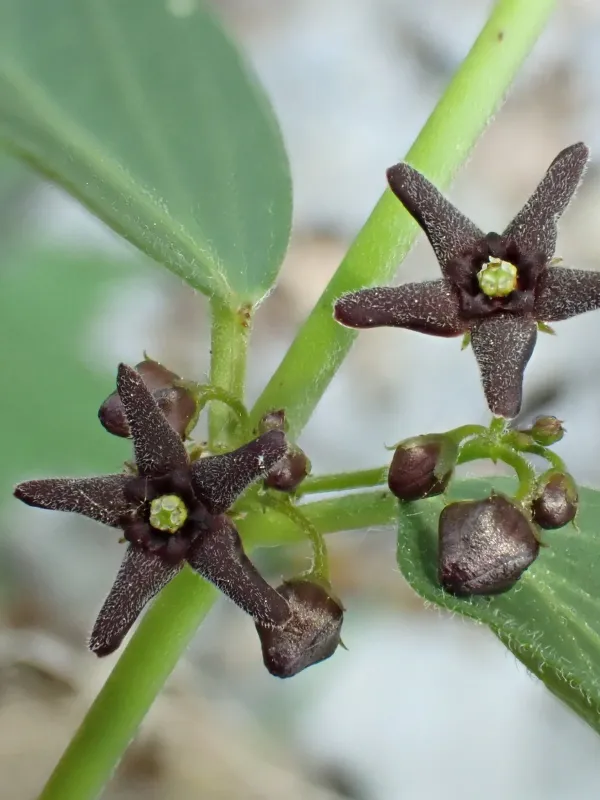
Botanically, it is characterized by its twining stems, dark purple flowers, and opposite, glossy leaves. The root system is complex and woody, allowing the plant to persist through multiple growing seasons and survive mechanical damage.
While historically studied for potential chemical properties, the plant's toxicity to livestock renders it a liability rather than a crop, necessitating strategies to manage its spread and mitigate negative agricultural impacts.
Main diseases and pests
Black swallow-wort is remarkably resistant to many common diseases and pests, which contributes to its status as a highly invasive and dominant species. This natural resilience makes management labor-intensive and difficult.
The primary threat it poses to agriculture is the displacement of native forage species on pastures, as its foliage is toxic to mammals. This significantly lowers the value and safety of grazing land.
Mechanical control, such as mowing or tillage, often fails because the plant can quickly regenerate from its robust root crown. Consistent, long-term interventions are required to exhaust the plant's energy reserves.
Chemical control using systemic herbicides is often the most effective method, although success depends on timing the application correctly to ensure maximum absorption into the root system during the late summer.
Preventative measures must focus on monitoring borders and non-cropped areas to prevent seed maturation and dispersal. The wind-borne seeds, similar to those of milkweed, can easily colonize adjacent high-quality fields.