
Herbaceous periwinkle
Vinca herbacea
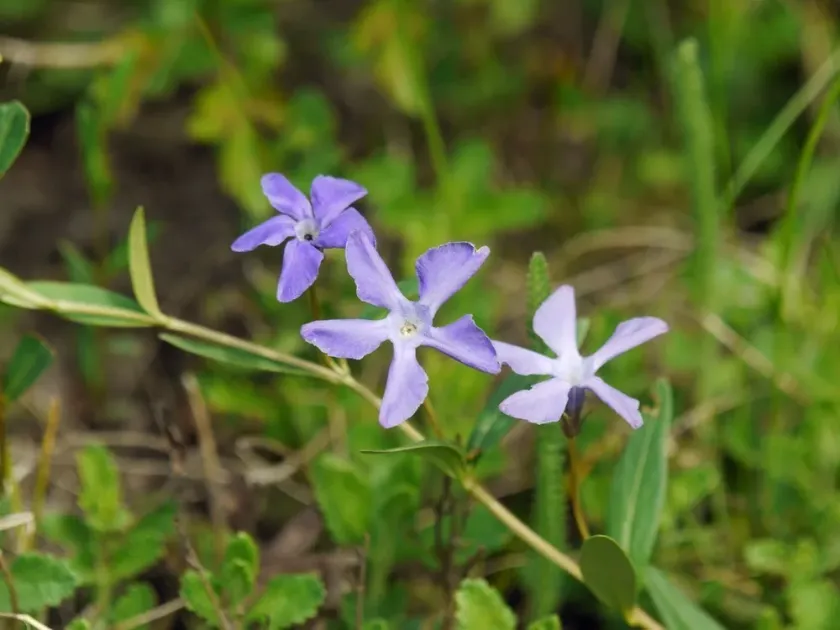
Description
Sowing dates
Sowing of Vinca herbacea is typically performed in late autumn to take advantage of natural stratification, which ensures uniform germination in the spring.
If sowing in the spring, seeds must be cold-stratified for at least one month at temperatures between 2 and 5 degrees Celsius to break seed dormancy.
Seeds are sown in shallow rows, spaced 25 to 30 centimeters apart, and covered very lightly with soil to ensure they receive sufficient light for germination.
Vegetative propagation is the preferred method for large-scale production, using cuttings or division of established clumps during the late summer season.
Maintaining consistent soil moisture is crucial during the germination and initial growth stages to prevent the delicate seedlings from desiccating.
Growing requirements
Vinca herbacea, a member of the Apocynaceae family, thrives in well-lit, open environments but can tolerate partial shade in hotter climates.
The plant performs best in light, sandy loam or loamy soils that possess excellent drainage characteristics to prevent root system suffocation.
It prefers a neutral to slightly alkaline soil pH and benefits from moderate additions of organic matter to improve long-term soil structure.
While the plant is highly frost-hardy and survives harsh winters, it requires protection from stagnant water, which is the most common cause of root rot.
Regular weeding is essential in the early stages of plant establishment to ensure the crop has minimal competition for nutrients and water resources.
Yield
The yield of Vinca herbacea is calculated based on the total dry biomass of the aerial parts harvested during the peak flowering season of the plant.
Consistent yields are achieved by maintaining plant density at approximately 10–12 plants per square meter, which maximizes foliage production.
The application of balanced mineral fertilizers during the early vegetative phase can significantly boost the overall production of secondary metabolites.
Productivity is also improved by optimizing water supply during critical growth periods, effectively increasing the harvestable biomass of the crop.
Proper management of the plantation allows for continuous harvesting over several years, provided that the rootstock remains healthy and undisturbed.
Main diseases and pests
Fungal diseases, including leaf spot and various types of rust, are the primary threats to Vinca herbacea, particularly in humid or overcrowded conditions.
Preventive measures include the application of appropriate fungicides and ensuring good air circulation between rows to minimize disease spread.
Insect pests, such as aphids and scale insects, may cause damage by feeding on young stems, leading to stunted plant growth and reduced vigor.
Integrated pest management strategies are recommended, involving regular scouting and the use of eco-friendly insecticidal soaps when infestations appear.
Field sanitation, such as removing old plant debris after the end of the season, significantly reduces the likelihood of overwintering pathogens.
Harvesting
Harvesting is conducted during full bloom, as the concentration of target alkaloids within the foliage is highest at this developmental stage.
The aerial parts are harvested by cutting the stems 3–5 centimeters above the soil level, ensuring that the root system remains intact for regrowth.
Immediately following the harvest, the material should be transported to a drying facility to prevent degradation due to heat buildup in fresh piles.
The drying process is carried out at controlled temperatures of 40–45 degrees Celsius to preserve the delicate chemical composition of the plant material.
Finally, the dried product is sorted, packaged in moisture-proof containers, and stored in a cool, dark, and well-ventilated location until processing.