
White Tabernaemontana
Tabernaemontana alba
Description
Growing requirements
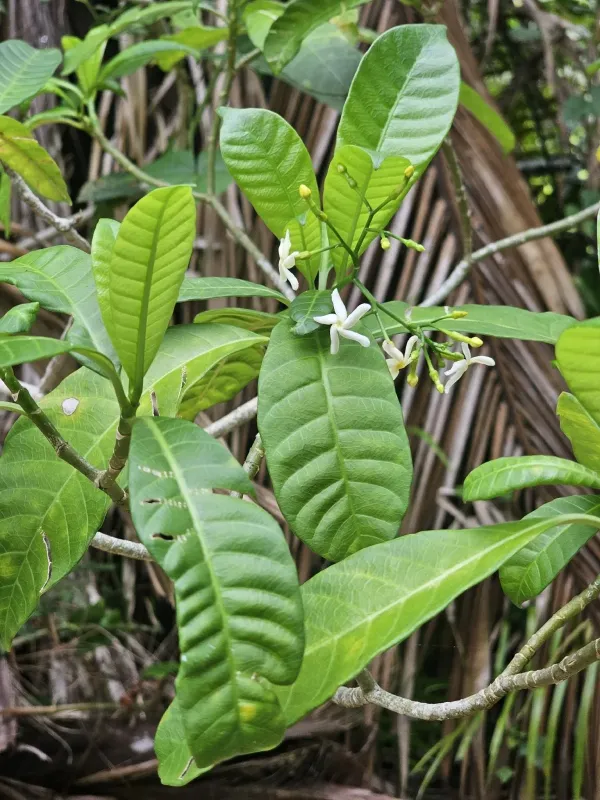
White Tabernaemontana (Tabernaemontana alba) is an evergreen tropical shrub or small tree belonging to the Apocynaceae family.
The species originates from the tropical rainforests of Central and South America, thriving in environments with high humidity and consistently warm temperatures.
For optimal growth, the crop requires fertile, well-draining soil with a neutral to slightly acidic pH level to ensure the root system stays healthy and active.
The plant is light-loving but sensitive to harsh, direct midday sun, which can scorch its glossy, dark green foliage; partial shade is ideal for indoor or greenhouse cultivation.
Beyond its ornamental value, Tabernaemontana alba is studied for its botanical properties and is used in various horticultural practices for its fragrant floral displays.
Main diseases and pests
The main pests affecting White Tabernaemontana include spider mites, mealybugs, and scale insects, which frequently attack the plant in low-humidity conditions.
Fungal issues, particularly root rot, are significant threats to this crop if the soil remains waterlogged or if there is insufficient drainage provided.
Aphids can occasionally infest new growth during the spring season, requiring careful monitoring and early intervention with mild insecticidal soaps.
Maintaining proper air circulation is vital to prevent the spread of powdery mildew and other airborne pathogens that thrive in stagnant greenhouse environments.
Integrated pest management strategies, such as regular physical inspections and the use of preventative fungicide sprays, are essential to maintain plant vigor.