
Rauvolfia serpentina
Rauvolfia serpentina
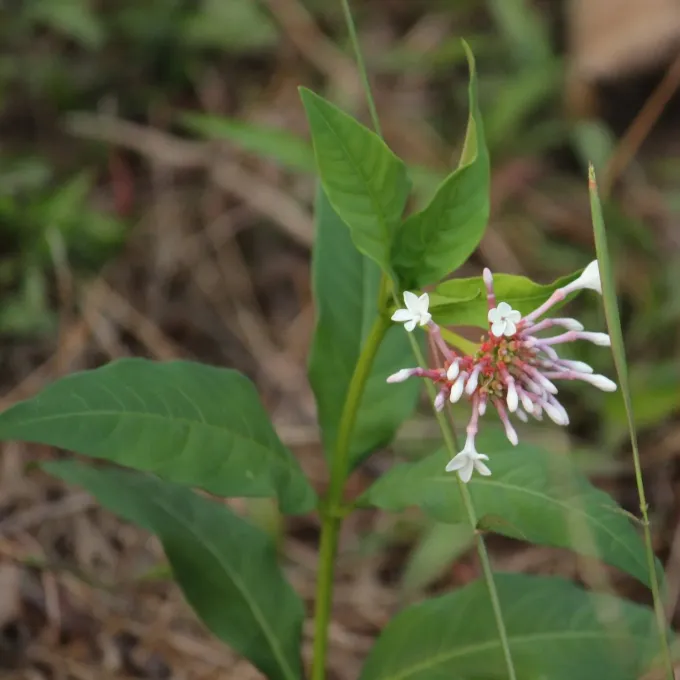
Description
Sowing dates
Propagation of Rauvolfia serpentina is primarily achieved through seeds or vegetative methods such as cuttings. Seed germination is generally low, making stratification a necessary step to enhance the energy of germination and overall success rates.
Sowing occurs in spring when soil temperatures reach 20–25°C. The substrate should be light, well-drained, and rich in organic matter to support the initial vigorous growth of seedlings, which are quite delicate in the early stages.
Cuttings are planted in protected environments with high humidity and stable temperatures. Root formation typically requires four to six weeks, after which the young plants are hardened off before being transplanted into the open field.
Planting density is adjusted based on specific regional conditions, typically ranging from 20,000 to 30,000 plants per hectare. This density provides sufficient space for the development of a robust root system, which is the primary economic target of this crop.
Effective weed management during the early stages of vegetation is crucial, as the crop is highly sensitive to competition for nutrients and sunlight. Watering must be consistent but moderate to prevent waterlogging, which the plant does not tolerate well.
Growing requirements
Rauvolfia serpentina, a member of the Apocynaceae family, is a tropical perennial shrub that requires specific environmental conditions to achieve optimal concentrations of active alkaloids.
The crop thrives in temperatures between 15°C and 35°C. It is extremely sensitive to frost; temperatures dropping to 0°C can cause severe damage or inhibit growth significantly, limiting its cultivation to tropical and subtropical climates.
Ideal soils are fertile, loamy, or sandy-loam with deep horizons and a pH ranging from neutral to slightly acidic. Good drainage is imperative, as water stagnation during colder periods often leads to root rot, destroying the primary harvested part of the plant.
The plant requires high air humidity and regular rainfall during its active growth period. In arid regions, supplemental irrigation is necessary because moisture stress directly decreases the biomass and alkaloid content of the roots.
While the plant prefers sunny locations, young specimens may benefit from partial shade to protect them from intense heat and soil dehydration during the initial establishment phase.
Yield
The main commercial product consists of dried roots containing a complex array of indole alkaloids, most notably reserpine, which is utilized globally as a pharmaceutical agent for managing hypertension.
Industrial root yields are heavily dependent on plant age and agronomic management. Harvesting is recommended after the third or fourth year, as alkaloid concentration peaks as the plant reaches full maturity.
Average yields reach approximately 1.5–2 tons of dried roots per hectare under intensive cultivation practices. In less controlled or traditional systems, these figures can be considerably lower.
Crop quality is determined by both physical mass and total alkaloid percentage. Balanced mineral nutrition, particularly potassium and phosphorus, is applied during peak growth to optimize the synthesis and storage of these organic compounds.
Post-harvest, roots are cleaned, washed, and dried in controlled conditions at temperatures not exceeding 60°C to preserve the thermo-labile alkaloids and ensure the highest pharmacological efficacy.
Main diseases and pests
Rauvolfia serpentina is susceptible to various fungal pathogens, with root rots being the most destructive, especially in fields with poor drainage or insufficient soil aeration.
Common pests include sucking insects such as aphids and spider mites. These can cause widespread damage by attacking tender foliage and shoots, significantly weakening the plant's overall vigor and resistance.
Disease prevention is managed through strict crop rotation schedules, avoiding excessive planting density, and ensuring the prompt removal of crop residues that could harbor spores or overwintering pests.
When pest control becomes necessary, the use of selective bio-insecticides is preferred to maintain the integrity and purity of the medicinal raw material, avoiding harmful synthetic chemical residues.
Nematodes pose a substantial threat to root health. Effective management involves pre-planting soil fumigation or the use of cover crops with natural phytosanitary properties to reduce pathogen pressure.
Harvesting
Harvesting is performed in autumn when the aerial portions of the plant begin to wither naturally, indicating a shift in nutrient reserves from the shoots into the underground storage organs.
Mechanical harvesting is carried out using specialized diggers or deep-tillage plows. Extreme care is taken to minimize mechanical wounding, which provides entry points for soil-borne pathogens and lowers quality.
Primary processing involves trimming the aerial stems, removing fine lateral roots, and thorough washing under running water to eliminate all traces of soil contamination.
Drying is a critical step; the moisture content must be reduced to 10–12% to facilitate stable long-term storage and prevent degradation of the active pharmacological compounds.
Final storage requires cool, dark, and dry conditions with adequate ventilation to prevent fungal outbreaks and infestation by storage pests, ensuring the product remains compliant with international standards.