
Pachypodium menabeum
Pachypodium menabeum
Description
Growing requirements
Pachypodium menabeum is a robust succulent species belonging to the Apocynaceae family. Native to the Menabe region of Madagascar, this plant has evolved to thrive in arid, rocky environments where precipitation is highly seasonal and limited.
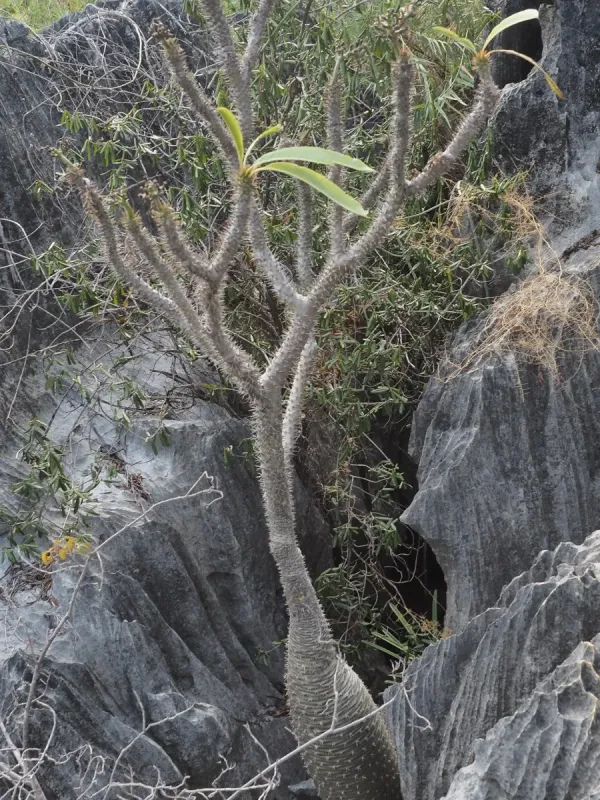
Botanically, the plant is characterized by a thick, caudiciform stem protected by sharp spines, which serves as a vital water storage organ. During the growing season, it produces terminal clusters of narrow, lanceolate leaves and, when mature, impressive funnel-shaped flowers that are highly valued in horticultural collections.
Cultivation requires full, intense sunlight exposure to maintain the plant's structural integrity and prevent etiolation. In environments where high light is unavailable, growth slows significantly, and the risk of physiological stress increases, making sun-drenched locations essential for health.
The agrotechnical management focuses on a strict "dry-wet" cycle. During the warm months, water should be applied moderately, allowing the substrate to dry out completely between sessions. In winter, the plant enters a dormant phase where water must be withheld to mimic its natural environment.
Soil requirements demand a highly porous, gritty medium. A standard mix usually includes volcanic rock, coarse sand, and a minimal amount of organic matter to provide adequate drainage. Pots must feature wide drainage holes to prevent root asphyxiation, which is the primary cause of decline for this species.
Main diseases and pests
The most significant threats to Pachypodium menabeum are fungal pathogens such as Pythium and Phytophthora, which cause stem and root rot. These occur primarily due to poor air circulation and excessive moisture retention in the soil, which leads to the collapse of the succulent tissues.
Pests such as mealybugs and spider mites frequently affect the growing tips of the plant. These insects thrive in dry conditions and can cause significant damage to the leaf buds. Management involves periodic inspection and, if necessary, the application of targeted insecticides to preserve the plant's decorative appearance.