
Pachypodium horombense
Pachypodium horombense
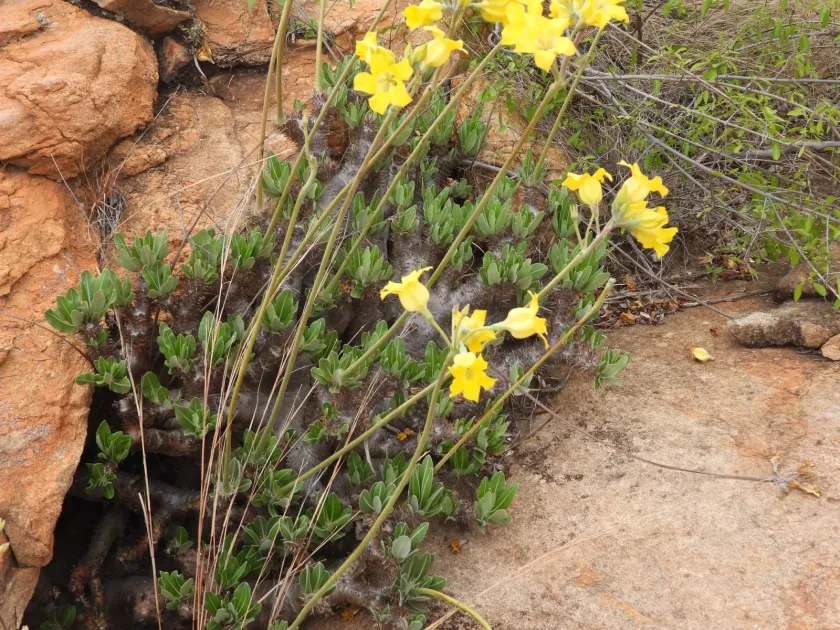
Description
Sowing dates
Propagation of Pachypodium horombense is primarily achieved through seeds, as cuttings are difficult to root and can damage the ornamental structure of the plant.
The ideal time to sow seeds is during the spring season, allowing the seedlings to benefit from increasing daylight hours and warming temperatures.
A well-draining, mineral-based substrate is essential for seed germination, typically composed of a mix of pumice, perlite, and a small amount of peat moss.
Seeds should be kept in a warm environment with temperatures maintained between 25 and 30 degrees Celsius, ensuring the soil remains slightly damp but not waterlogged.
Once the seedlings develop their first set of true leaves, they should be carefully transplanted into individual pots with excellent drainage capabilities.
Growing requirements
Pachypodium horombense is a succulent species belonging to the Apocynaceae family, native to the arid and rocky outcrops of the Horombe Plateau in Madagascar.
As a light-loving plant, it requires full sun exposure or high-intensity grow lights to maintain its compact, sturdy growth habit and characteristic caudex.
The potting medium must be highly porous; it is recommended to use a mix specifically designed for desert succulents, avoiding high organic content that retains moisture.
During the growing season, regular but sparse watering is required, ensuring the soil dries out completely between waterings to mimic the natural drought cycles.
In the winter months, the plant enters a period of dormancy, during which watering should be minimized or suspended to prevent cold-related rot.
Main diseases and pests
The most significant threat to Pachypodium horombense is overwatering, which quickly leads to root rot and irreversible tissue damage to the caudex.
Common pests include spider mites and mealybugs, which thrive in low-humidity environments and can settle in the crevices of the stem.
Poor ventilation can lead to the development of fungal infections, which are often indicated by soft, discolored spots on the skin of the plant.
Regular monitoring of the stem for signs of shriveling or soft patches is necessary, as early intervention can save the plant from structural failure.
If an infestation occurs, it is recommended to treat the plant with systemic insecticides or gentle botanical oils, carefully avoiding direct exposure to sensitive leaf tissues.