
Pachypodium geayi
Pachypodium geayi
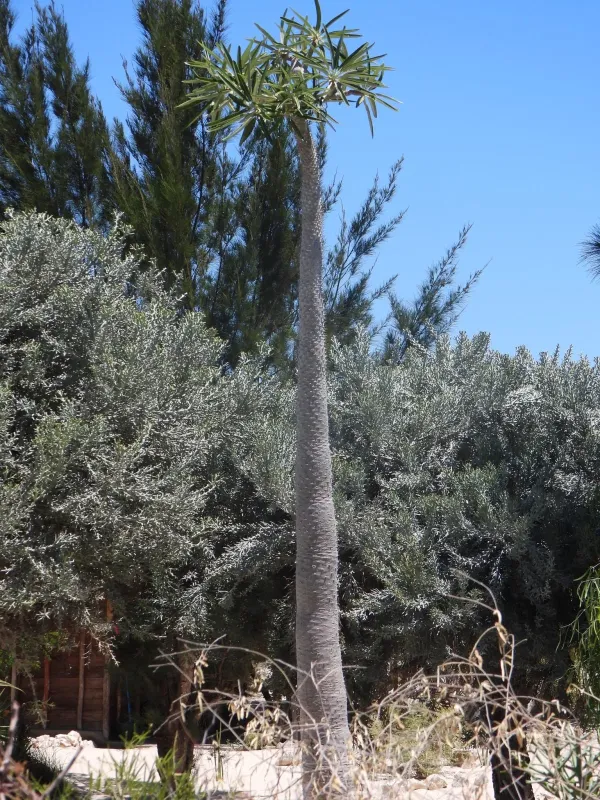
Description
Growing requirements
Pachypodium geayi is a striking succulent tree native to the arid regions of Madagascar, belonging to the Apocynaceae family. It is highly valued in horticulture for its silver-hued, spiny stem and narrow, attractive leaves.
To cultivate this species successfully, high levels of sunlight are non-negotiable. Full sun exposure ensures the plant maintains its structural integrity and promotes the dense growth of its protective spines, which are typical for the species.
The planting substrate must be highly porous and well-draining. A mix consisting of equal parts potting soil, coarse sand, and perlite is recommended. Ensuring the pot has drainage holes is mandatory to prevent root suffocation.
Watering requirements follow a seasonal pattern. During the active growing season from spring to autumn, water deeply but allow the soil to dry out completely between applications. Reduce watering drastically during the dormant winter phase.
Temperature management is key to preventing stress. Keep the plant in a warm environment, ideally between 20°C and 30°C. Protect it from freezing temperatures, as the succulent tissues are highly susceptible to frost damage.
Main diseases and pests
Spider mites are the most common pests affecting this plant, especially when humidity levels drop too low. Frequent monitoring and light misting around the plant can help deter these minute arachnids.
Mealybugs represent another significant threat, often hiding in the crevices between the spines. They feed on plant sap and can weaken the specimen if not managed with isopropyl alcohol or appropriate systemic insecticides.
Root rot is the most destructive condition, usually caused by overwatering or poor soil aeration. Once the roots are compromised, the decay can spread rapidly upward, eventually destroying the entire trunk of the plant.
Fungal leaf spots may appear if the foliage remains wet for extended periods in a humid, stagnant environment. Improving air circulation around the plant is the most effective cultural method to mitigate this risk.
Maintaining a clean growing space and removing fallen leaves promptly prevents the development of mold and discourages various pests that thrive in decaying organic debris.