
Pachypodium densiflorum
Pachypodium densiflorum
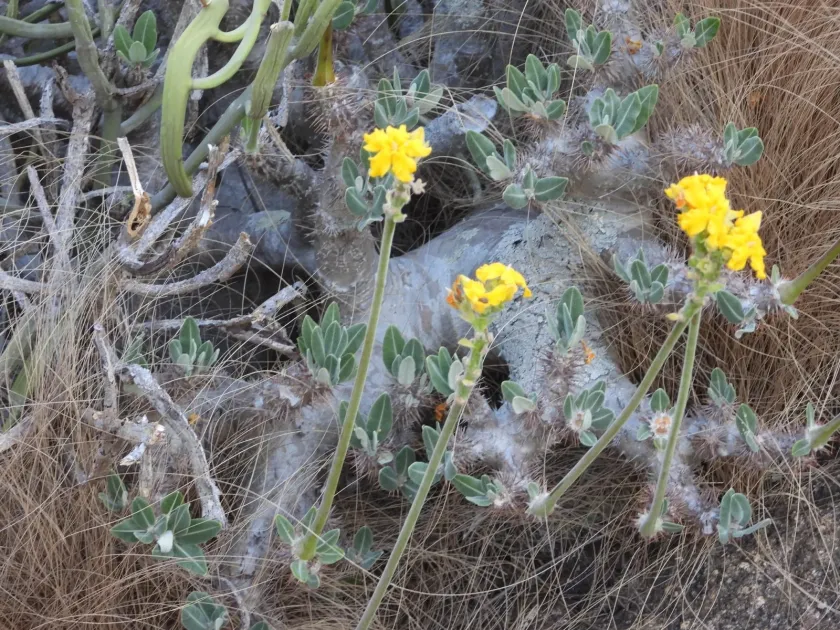
Description
Sowing dates
Propagation of Pachypodium densiflorum is most commonly achieved through seeds during the spring season. The seeds require pre-soaking in warm water for several hours to enhance germination rates.
Sowing should be done in a light, well-draining substrate composed of sand and peat. Containers must be covered with plastic film to create a greenhouse effect and maintain high humidity levels.
The temperature for seed germination should be at least +25°C. It is crucial to provide regular ventilation for the seedlings to prevent the formation of mold on the substrate surface.
The first sprouts usually emerge unevenly, typically between 2 to 4 weeks after sowing. As soon as the sprouts appear, light exposure should be gradually increased to acclimate the plants to direct sunlight.
Pricking out the young seedlings should not be attempted until at least six months later, once a distinct caudex has formed and the root system has sufficiently matured.
Growing requirements
Pachypodium densiflorum belongs to the Apocynaceae family and is endemic to the island of Madagascar. This culture naturally thrives on rocky slopes with high insolation and excellent air circulation.
Successful cultivation requires bright, direct sunlight for at least 6 to 8 hours daily. Under light-deficient conditions, the stem will begin to deform, losing its characteristic architectural shape.
The soil mixture must be extremely loose and mineral-based, as this plant is highly sensitive to moisture stagnation in the root zone. A mix including gravel, zeolite, and a small amount of organic matter is ideal.
Watering should be moderate during the spring and summer, applied only after the soil ball has completely dried out. In winter, the plant enters a dormant phase and requires almost complete suspension of watering.
Temperature control is critical: during the vegetative phase, the optimal range is +22...+30°C, while during dormancy, a decrease to +12...+15°C is acceptable, but never lower.
Main diseases and pests
The primary threat to the plant is root rot, which arises due to waterlogged substrate during the colder months. Once the root system is affected, saving the succulent becomes exceptionally difficult.
In low-humidity environments, Pachypodium may be attacked by spider mites, which extract sap from young leaves. Acaricide treatments are necessary to control these infestations.
Mealybugs are another common pest, often hiding in leaf axils and between spines. Their colonies should be removed mechanically using a cotton swab dipped in an alcohol solution.
Scale insects can infest the plant's stem, forming characteristic brown plaques. If these are detected, systemic insecticides must be applied to the entire plant to ensure effective eradication.
Disease prevention relies strictly on maintaining a proper watering schedule, ensuring good air circulation, and using sterilized soil during any repotting processes.