
Pachypodium decaryi
Pachypodium decaryi
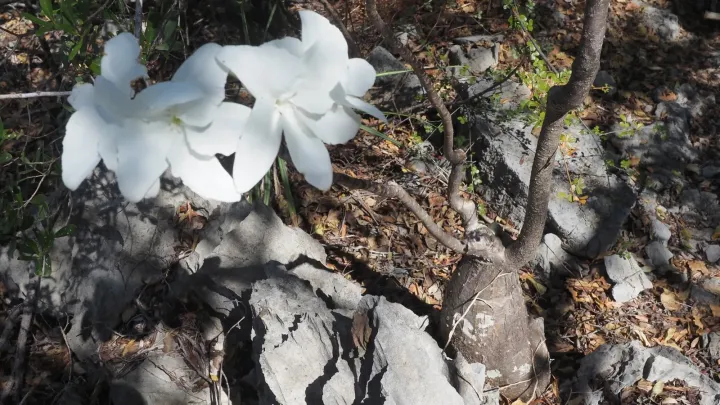
Description
Sowing dates
Propagation of Pachypodium decaryi in cultivation is primarily carried out by seeds. Sowing is best performed during the spring and summer periods when daylight hours are at their maximum.
Successful germination requires a loose, sterile substrate based on sand and peat. Containers with seeds should be kept at temperatures ranging from +25°C to +30°C.
Maintaining a constant moderate soil moisture level until germination is a critical factor. Seedlings are extremely sensitive to temperature fluctuations and direct cold drafts.
Pricking out young plants should be done only after they have strengthened and developed several true leaves. Transplanting requires extreme care due to the delicate root system.
In industrial propagation, grafting rare species onto more robust rootstocks is sometimes practiced, though seed propagation remains the preferred method to maintain species purity.
Growing requirements
Pachypodium decaryi belongs to the Apocynaceae family and is endemic to the island of Madagascar. It is a tree-like succulent characterized by a pronounced caudex designed to store water.
The plant has high lighting requirements, needing direct sunlight for most of the day. A lack of light leads to elongated stems and a loss of the plant's natural ornamental shape.
The soil mix must possess excellent drainage properties. It is optimal to use ready-made substrates for cacti, supplemented with perlite, vermiculite, and fine gravel.
Watering must be strictly regulated: in summer, irrigate only after the soil ball has completely dried; in winter, provide minimal water to prevent root desiccation.
It is critical to avoid stagnant water in the pot, which invariably leads to caudex rot. During the dormant period, the plant may shed its leaves, which is a normal physiological process.
Main diseases and pests
The primary threat to the culture is overwatering, which provokes the development of root and stem rots. These conditions are extremely difficult to treat, making prevention the best strategy.
Among pests, the spider mite causes the most damage, often affecting the plant in low-humidity indoor environments. Systemic acaricides are recommended for control.
Mealybugs can localize in the leaf axils and on the apex of the trunk. Regular inspection of the plant allows for the early detection and removal of insect colonies.
Scale insects can also attack the trunk of the Pachypodium, draining its sap and weakening the plant's immunity. Trunk cleaning is performed manually using an alcohol solution.
Adhering to strict quarantine measures when acquiring new specimens helps prevent the spread of pests throughout the entire plant collection.