
Odontadenia semidigyna
Odontadenia semidigyna
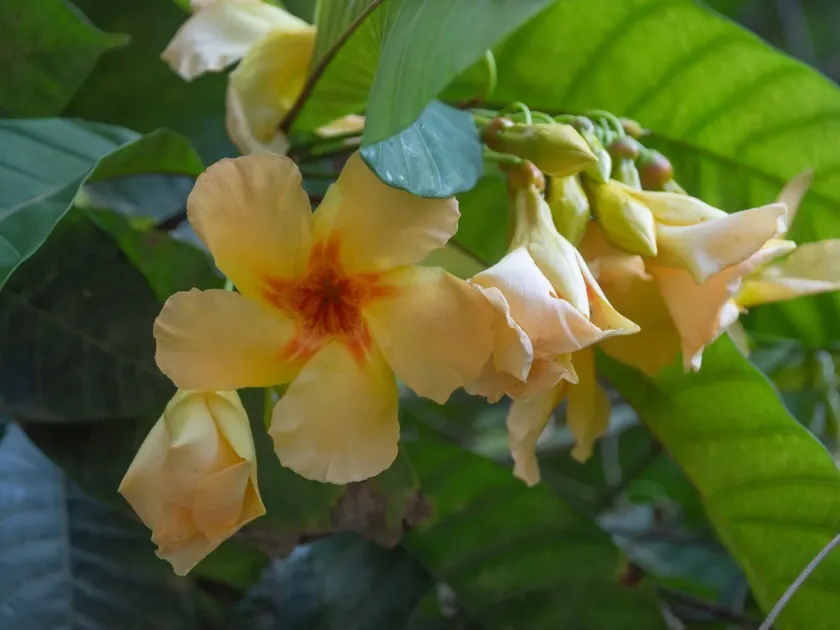
Description
Growing requirements
Odontadenia semidigyna is a vigorous woody vine belonging to the Apocynaceae family. Native to the tropical rainforests of Central and South America, this plant is well-adapted to high-humidity environments and warm climates found in its natural habitat.
For successful cultivation, this species requires a consistent tropical climate with temperatures rarely dropping below 15-18°C. It thrives in bright, indirect light, which mimics the dappled sunlight found beneath the forest canopy in its native range.
The soil requirements focus on high organic matter content combined with excellent drainage properties. A loose, aerated substrate is crucial, as waterlogged conditions lead to rapid root decay, which is the primary cause of plant failure in artificial environments.
Botanically, the plant is characterized by large, glossy, elliptical leaves and prominent, funnel-shaped flowers that emit a pleasant fragrance. As a climber, it produces long, sprawling stems that require structural support such as trellises or sturdy wires to maintain healthy growth and proper display.
Its primary use is decorative, often featured in conservatories and botanical collections for its aesthetic value and exotic appearance. Research into the chemical composition of its tissues has also been conducted, reflecting the interest in the secondary metabolites found within the Apocynaceae family.
Main diseases and pests
The most common pests affecting this plant include spider mites and mealybugs, which are particularly problematic in greenhouse environments with poor airflow. Regular monitoring of the leaf undersides is essential for early detection and mitigation of infestation.
Fungal pathogens causing root rot are a major threat, typically occurring due to improper drainage or cold, wet soil conditions. Ensuring the substrate is free-draining and avoiding overwatering are the best strategies to maintain the long-term health of the plant.