
Gonioma kamassi
Gonioma kamassi
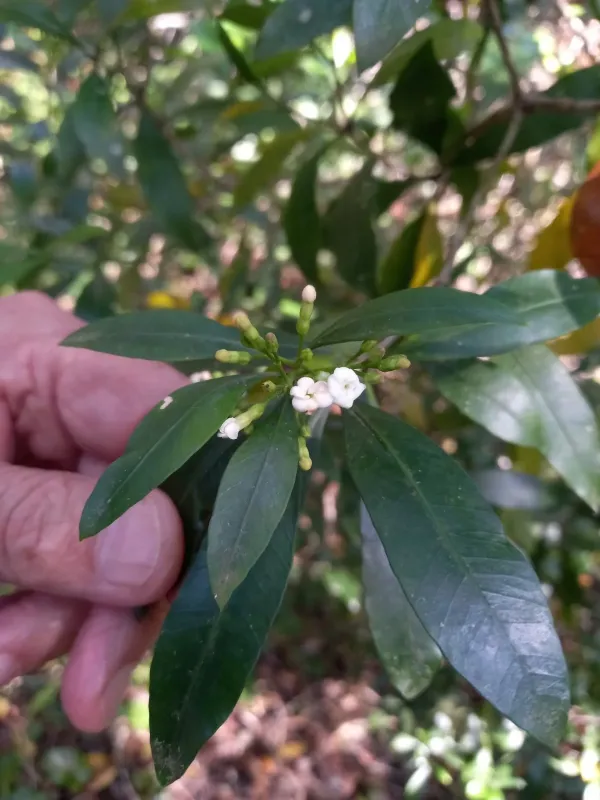
Description
Growing requirements
Gonioma kamassi is a specialized evergreen tree or shrub belonging to the Apocynaceae family. Native to the Cape region of South Africa, it is widely recognized by its common name, Kamassi, which is highly valued in the timber industry.
The plant thrives in moist, deep, and well-drained soil conditions found in riverine or mountain forests. In agricultural practice, maintaining proper soil pH levels is essential for optimal growth, as the tree prefers neutral to slightly acidic substrates.
Climate requirements for Gonioma kamassi include a mild subtropical environment. It cannot tolerate severe frosts, which can cause significant damage to the plant tissue, particularly in young specimens that are not yet established.
Light management is crucial, as the tree naturally evolves under a canopy. While it requires light for photosynthesis, protecting it from direct, intense sunlight during the early growth stages is necessary to prevent leaf scorch and dehydration.
As a slow-growing species, it requires patience and stable management. It displays good resistance to local environmental stressors, provided that the moisture levels are maintained consistent throughout the growing season.
Harvesting
The primary economic output of this culture is its high-density timber, traditionally known as Kamassi wood. Its fine-grained texture makes it one of the most durable and reliable woods available for precision manufacturing.
The wood has historically served the textile industry, particularly for shuttle production, but its modern value lies in instrument making and high-end cabinetry, where precision is paramount.
Harvesting techniques involve selective logging to maintain ecological balance. The high density of the wood requires specialized cutting tools and a slow, controlled seasoning process to prevent the timber from warping or splitting.
Due to its physical properties, the wood is extremely resistant to wear, making it an excellent candidate for parts subject to constant friction and mechanical pressure.
- Extreme mechanical hardness
- Excellent dimensional stability
- Fine, uniform grain pattern
- Sustainability in selective harvesting