
Dictyophleba lucida
Dictyophleba lucida
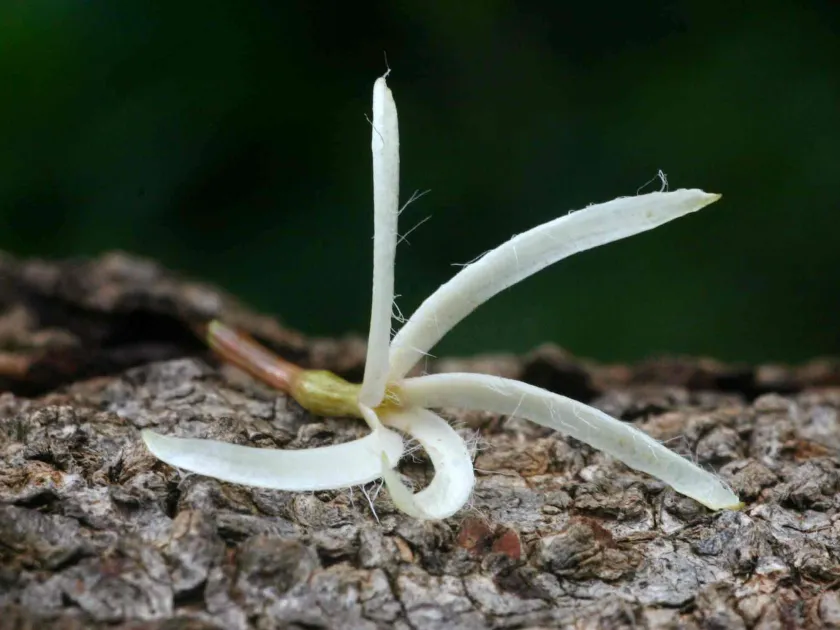
Description
Growing requirements
Dictyophleba lucida is a robust woody vine belonging to the Apocynaceae family. It is native to the tropical forests of Africa, where it thrives in the dense canopy and humid environment.
The plant requires high humidity and consistent tropical temperatures to maintain healthy metabolic functions. Soil conditions must be rich in organic matter and possess excellent drainage capabilities to avoid waterlogging.
As a climbing species, it requires vertical support structures to grow properly. In cultivation, pruning is necessary to control its vigorous growth and manage the density of the foliage.
Bright, indirect light is essential for the plant to thrive. Direct exposure to intense midday sunlight can damage the leaves, so positioning in semi-shaded areas is recommended for optimal performance.
Watering should be consistent throughout the growing season. It is vital to ensure that the soil remains moist but not saturated, as the root system is sensitive to low-oxygen environments caused by excess water.
Main diseases and pests
Spider mites are the most common pests affecting Dictyophleba lucida, especially in indoor or greenhouse settings where the air is frequently dry. They cause yellowing and thinning of the leaves.
Root rot, caused by various fungal pathogens, often occurs when the soil structure is too dense or irrigation is excessive. Using well-draining potting mixes is a primary prevention method.
Scale insects can colonize the stems and underside of leaves, sapping the plant's vigor. Regular manual inspection and the application of horticultural oils can keep populations in check.
Fungal leaf spot diseases may appear during periods of poor ventilation. Maintaining good airflow between the vines helps minimize the impact of these conditions.
Integrated pest management, combining physical inspection and biological control methods, is the most sustainable way to protect the plant from common threats.