
Ceropegia sankuruensis
Ceropegia sankuruensis
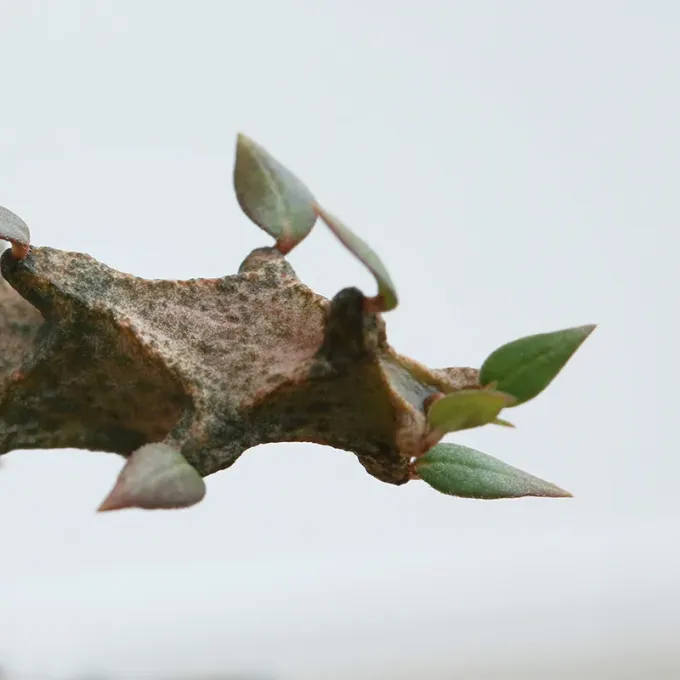
Description
Growing requirements
Ceropegia sankuruensis is a succulent plant species belonging to the Apocynaceae family. Native to the tropical regions of Africa, specifically around the Sankuru River basin, it has evolved to thrive in environments with seasonal rainfall patterns.
The plant is distinguished by its slender, vining stems and fleshy leaves that act as water storage organs. Many specimens also develop specialized root tubers, which are a critical evolutionary adaptation for enduring periods of extreme drought in their natural habitat.
Cultivation requires a highly porous and well-draining soil mix. A suitable substrate for this culture usually consists of a blend of pumice, coarse sand, and a small portion of peat or leaf mold, ensuring that water does not remain stagnant around the tubers.
Light intensity is paramount for the health of Ceropegia. It requires bright, indirect light to maintain its compact growth form and vibrant leaf coloration. Insufficient light results in etiolation, which weakens the plant's structural integrity.
Temperature management should mimic the tropical conditions of its origin. The plant thrives in temperatures between 20°C and 25°C. During the dormant winter season, the plant should be kept cooler, around 15°C, with significantly reduced irrigation frequency.
Main diseases and pests
Root rot is the most significant threat to the survival of Ceropegia sankuruensis. This condition is primarily caused by overwatering and poor drainage, which creates an anaerobic environment where pathogenic fungi flourish and attack the root system.
Mealybugs are frequent pests that infest the crevices of the stems and the undersides of the leaves. These insects extract plant sap, weakening the host and often leaving behind honeydew that fosters the growth of sooty mold.
Spider mites are another major concern, especially in environments with low relative humidity. They cause stippling and yellowing of the foliage, which can lead to premature leaf drop if the infestation remains uncontrolled for a long period.
Prophylactic measures, such as maintaining good air circulation and inspecting the foliage regularly, are the most effective way to prevent outbreaks. Chemical control using systemic pesticides is recommended only as a last resort for severe infestations.
To ensure long-term health, growers must avoid the use of heavy fertilizers. Using a weak, balanced liquid fertilizer designed for succulents during the growing season is sufficient to provide necessary nutrients without causing nutrient burn or excessive succulent growth.