
Ceropegia fusca
Ceropegia fusca
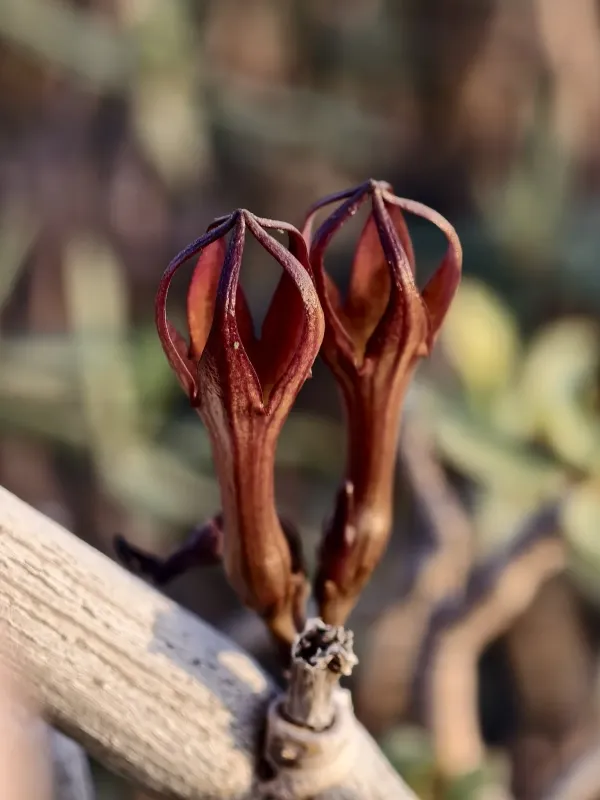
Description
Growing requirements
Ceropegia fusca is a fascinating succulent species belonging to the Apocynaceae family, native to the rugged terrains of the Canary Islands.
This species is characterized by its stiff, upright, and branching stems that give it a shrub-like appearance, differentiating it from trailing Ceropegia varieties.
It thrives in environments with high light intensity, as it is naturally adapted to the arid and rocky conditions of its native habitat.
The cultivation of this plant requires a highly porous, gritty substrate that ensures rapid drainage to prevent moisture from lingering around the sensitive root system.
Regarding climate, Ceropegia fusca prefers stable temperatures during the growing season and requires a distinct dry period during its winter dormancy.
Main diseases and pests
The primary threat to the health of Ceropegia fusca is overwatering, which quickly leads to root rot and irreversible tissue collapse.
Mealybugs are the most common pests, often hiding in the crevices of the branches, making them difficult to detect until an infestation is well established.
Spider mites may also affect the plant during periods of low humidity, causing visible scarring and reduced vitality in the succulent stems.
Cultural control, such as improving ventilation and spacing between individual plants, is essential for maintaining a healthy and disease-free crop.
In cases of severe infestations or infections, the use of specialized insecticides or fungicides is necessary to restore the biological balance of the plant.