
Catharanthus lanceus
Catharanthus lanceus
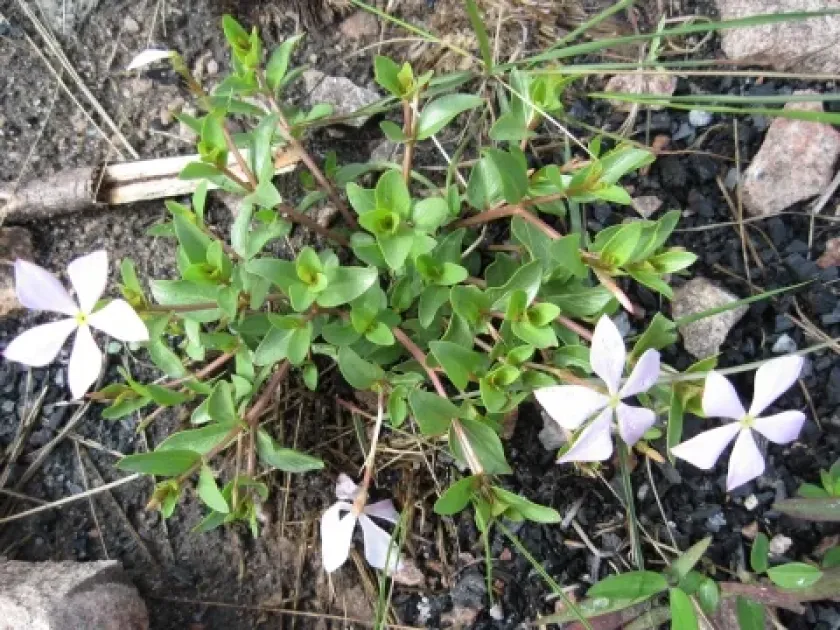
Description
Sowing dates
Catharanthus lanceus is a heat-loving plant that requires precise timing for sowing to ensure successful establishment and optimal growth throughout the season.
Direct field sowing is only feasible in tropical climates; in temperate zones, the crop must be started in greenhouses or nurseries several weeks before the last frost.
Seeds are small and should be sown in high-quality, fine-textured media, covered lightly, and kept at a constant temperature of approximately 25 degrees Celsius for rapid germination.
The transition from nursery to open field should be managed carefully, with a hardening-off period to prepare the seedlings for environmental stress and solar intensity.
Spacing is a crucial factor during planting; optimal density allows for uniform growth and ease of mechanical maintenance while preventing excessive humidity around the base.
Growing requirements
As a member of the Apocynaceae family, this species thrives in full sun exposure, which is essential for maximizing the biosynthesis of its medicinally active compounds.
The crop demands well-drained, fertile soil with a neutral pH, as poor drainage is the most significant factor leading to root diseases and stunted overall development.
Soil management should prioritize aeration, as compacted substrates significantly hinder the root expansion necessary for high biomass yield in medicinal harvests.
Regular irrigation is required during active growth, but moisture levels must be balanced to avoid waterlogging, which often induces susceptibility to opportunistic pathogens.
Fertilization regimes should be balanced, focusing on nitrogen during the vegetative phase and shifting toward potassium and phosphorus to support the reproductive and chemical development stages.
Yield
The economic value of Catharanthus lanceus is primarily derived from its high content of specialized indole alkaloids, which are in demand for the pharmaceutical industry.
Biomass production is the main metric for yield, influenced significantly by local climate conditions, soil fertility, and the length of the growing season available to the crop.
Producers aim for a high harvest index, where the ratio of leaf mass to stem mass is optimized to maximize the concentration of alkaloids per unit of field area.
Technological improvements in agronomy and variety selection are essential to stabilize yields, as natural populations often vary in their chemical profiles and total biomass.
Efficient processing of harvested material is as important as the yield itself, as improper drying methods can rapidly degrade the quality of the pharmaceutical components.
Main diseases and pests
Root rot and wilt pathogens represent the most significant threats to plant health, typically occurring when soil moisture management is compromised during high-heat periods.
Fungal leaf spots can also reduce the photosynthetic surface area, indirectly affecting the plant's ability to produce necessary secondary metabolites for its chemical profile.
Pest management focuses on controlling sucking insects, such as aphids and whiteflies, which not only drain plant vigor but can also transmit viral infections.
Integrated Pest Management (IPM) strategies, including biological control and strict field sanitation, are recommended to maintain high standards of raw material quality.
- Crop rotation to avoid soil-borne pathogen buildup in the fields.
- Usage of pathogen-free starting material for nursery operations.
- Monitoring systems to detect pest outbreaks in early stages.
Harvesting
The harvesting process is timed to coincide with the peak flowering phase, which is generally when the concentration of the desired alkaloids is at its maximum level.
Crops are cut above the base to allow for potential regrowth if the climate permits, though single-harvest systems are often preferred for uniformity in industrial scales.
Mechanical harvesting equipment must be adjusted to ensure clean cuts, avoiding maceration of the plant tissues which can trigger enzymatic degradation of valuable chemical compounds.
Post-harvest handling requires rapid transport to drying facilities where moisture is removed through controlled, low-temperature air circulation systems.
Final storage conditions are critical, necessitating airtight, dark, and cool environments to ensure the stability of the active compounds before they reach the extraction stage.