
Carissa opaca
Carissa opaca
Description
Growing requirements
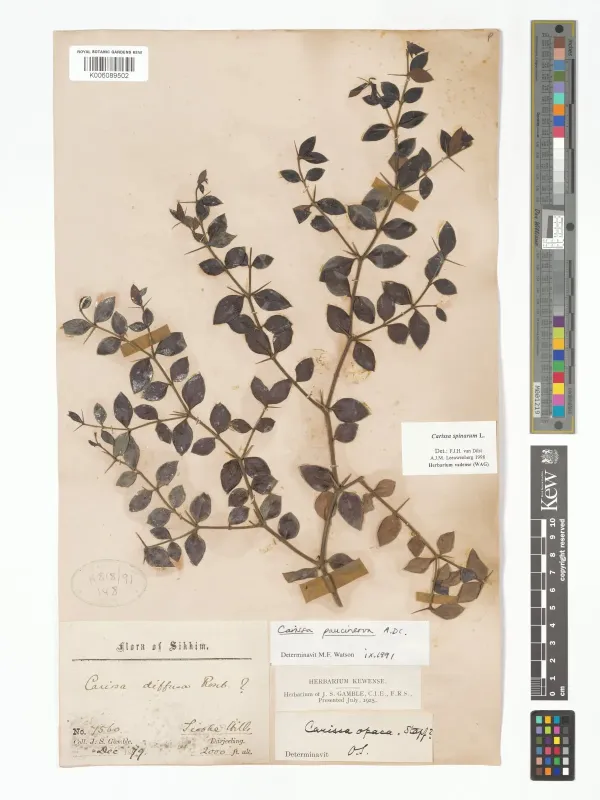
Carissa opaca is a perennial evergreen shrub belonging to the Apocynaceae family. Native to the rugged landscapes of South Asia, it is well-adapted to hot and dry climates, often found in rocky or sandy terrain. It is a highly robust plant capable of enduring harsh environmental conditions.
To cultivate Carissa opaca effectively, one must provide full exposure to sunlight. While it is incredibly drought-tolerant, young plants require consistent moisture until they establish a deep root system. Once mature, it can thrive in poor, rocky soils provided that drainage is excellent.
The ideal climate for this culture is tropical or subtropical. It is highly sensitive to frost, which makes its cultivation limited to regions without severe winters. Maintaining an ambient temperature above freezing is essential for its healthy development and fruit production.
Agricultural management includes strategic pruning to maintain a manageable size and shape. Since the plant is naturally thorny, periodic thinning of the canopy is necessary not only for health but also to ensure that sunlight reaches the inner portions of the bush to promote flowering.
In terms of usage, the plant serves as both an ornamental hedge and a source of nutrition. Its fruit is valued for its nutritional profile and is often consumed locally. The wood, known for its density and strength, is also utilized for various small-scale artisan crafts.
Main diseases and pests
The plant is relatively resistant to many diseases due to its thick, leathery leaves and protective latex sap. However, it can occasionally be affected by fungal infections if planted in areas with poor air circulation or excessive soil moisture, which often leads to root rot.
Insects like mealybugs and scale insects are the most common pests. These pests tend to target younger, more succulent shoots. Regular inspection and the use of insecticidal soaps or neem oil are generally sufficient to manage populations without the need for heavy chemical intervention.
Another potential threat involves the encroachment of weeds during the early stages of growth, which can compete for nutrients. Mulching the base of the plant helps suppress weed growth while maintaining necessary soil moisture levels around the roots.
The protective thorns act as an effective deterrent against large herbivores, significantly reducing animal-related damage compared to other fruit crops. This biological defense makes it an ideal candidate for low-maintenance landscaping and orchard borders.
Monitoring the plants for discoloration or leaf drop is crucial, as these are often the first signs of stress. Proper water management is the most effective preventative measure against the majority of physiological disorders in this species.
Harvesting
Harvesting the fruit of Carissa opaca requires care due to the sharp, bifurcated thorns that cover the branches. Workers must wear thick gloves to prevent injury during the collection process. The fruits are typically picked by hand when they reach a deep black or dark purple hue.
The ripening process is asynchronous, meaning that harvest occurs over a period of time rather than all at once. Farmers should plan for multiple passes through the orchard to gather the fruit as it reaches peak maturity, ensuring the best flavor and sweetness.
Post-harvest handling is critical because the fruit is somewhat fragile. It should be stored in ventilated containers to prevent fermentation and bruising. For commercial purposes, fruits should be processed into jams, jellies, or syrups shortly after being harvested.
The yield of the plant can be improved through moderate fertilization during the early spring, which encourages the growth of new fruiting wood. Efficient orchard design, allowing for sufficient space between shrubs, is essential to maximize labor efficiency during the harvesting season.
Proper record-keeping of harvest dates can help growers predict future yields based on seasonal variations in temperature and rainfall. The fruit remains a niche but valuable crop due to its unique profile, which stands out in traditional fruit markets.