
Carissa macrocarpa
Carissa macrocarpa
Description
Sowing dates
Propagation of Carissa macrocarpa is primarily achieved through seeds or stem cuttings. Seeds should be sown in a light, well-draining substrate, maintaining a soil temperature of approximately 20–25 degrees Celsius to ensure consistent germination rates.
Cuttings are generally considered the preferred method, as they facilitate faster development to a fruit-bearing stage and help maintain the specific characteristics of the parent plant. Cuttings are harvested during the active growth period and planted in humid greenhouse conditions.
Young plants should be transplanted into open soil or permanent containers in the spring, once the risk of frost has completely passed. It is crucial to protect the seedlings from harsh direct sunlight during the first few weeks following the transplant.
When planting as a hedge, a density of 0.5–1 meter between plants is recommended. For commercial orchards intended for fruit production, the spacing should be increased to 2–3 meters to ensure proper airflow and light penetration throughout the canopy.
Carissa macrocarpa is a relatively slow-growing shrub, necessitating careful attention during the early stages of development. It is essential to avoid overwatering, as excess moisture can quickly lead to root rot in young specimens.
Growing requirements
Carissa macrocarpa, a member of the Apocynaceae family, is an evergreen shrub native to the coastal regions of South Africa. It exhibits high adaptability to various soil types, including sandy and slightly saline soils, making it a robust choice for coastal gardening.
This plant thrives in full sun, which is essential for high fruit yield and overall plant health. While it can withstand periods of drought, consistent moisture levels during the growing season are necessary to support the production of high-quality berries.
Temperature is the most significant limiting factor, as the species is highly sensitive to frost. The ideal temperature range for growth is 18–30 degrees Celsius. In colder regions, the plant must be provided with protection or kept in a climate-controlled environment during winter.
The soil should be neutral to slightly acidic, rich in organic matter, and possess excellent drainage properties. Preventing water stagnation is critical; therefore, incorporating a gravel or expanded clay layer at the bottom of the planting hole is recommended.
- Requires full sun exposure for at least 6–8 hours daily.
- Needs regular application of balanced fertilizers during the flowering season.
- Pruning is essential for maintaining the shape and stimulating lateral branching.
- Requires shelter from strong winds when planted in open areas.
Yield
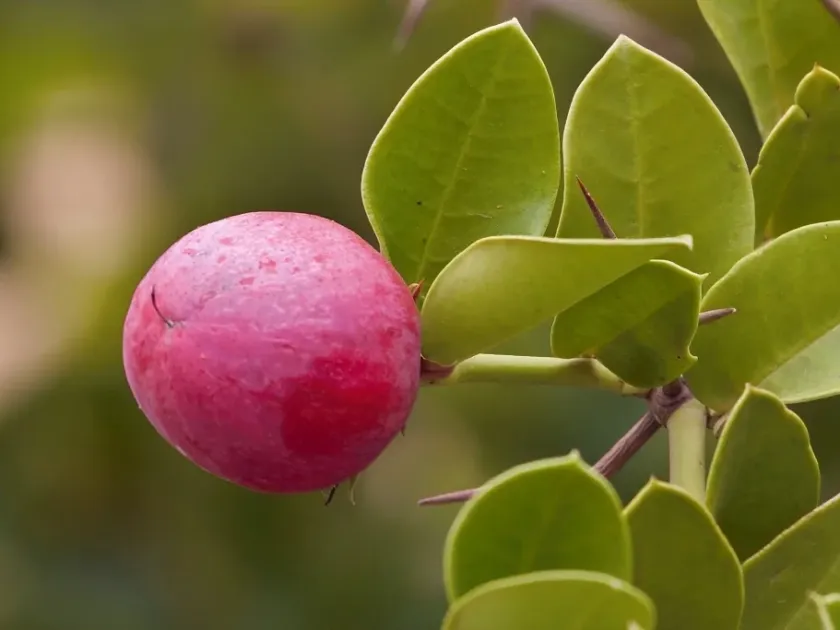
The fruits of Carissa macrocarpa are edible, bright red berries that taste somewhat like strawberries mixed with cranberries. Mature plants typically begin to bear fruit by their second or third year of life, provided they are in optimal growing conditions.
Harvesting is an ongoing process as the berries do not ripen simultaneously. It is essential to harvest only when the skin has turned a deep, uniform red; unripe fruit contains a milky latex that can be irritating and unpalatable.
A single berry weighs approximately 20–50 grams. Under intensive cultivation practices and proper fertilization, a mature bush can yield several kilograms of fruit per season, proving the crop's potential for small-scale commercial fruit production.
The culinary applications are versatile, ranging from fresh consumption to the production of jams, jellies, and sauces. The high natural pectin content makes the fruit an excellent ingredient for preserves without the need for synthetic thickeners.
Beyond its culinary value, the plant is highly valued for its aesthetic appeal and its sharp, bifurcated thorns, which create an effective natural barrier against wildlife and intruders in agricultural settings.
Main diseases and pests
Common pests affecting Carissa macrocarpa include scale insects, spider mites, and mealybugs. These pests feed on the plant's sap, leading to yellowing of the leaves, stunted growth, and a reduction in fruit production if left unchecked.
Integrated pest management, including the use of biological controls or systemic insecticides, is recommended. Regular inspection of the undersides of the leaves allows for the early detection and management of pest populations.
Diseases are frequently linked to poor cultural practices, particularly overwatering and insufficient airflow within the canopy. Root rot and Fusarium wilt are among the primary fungal infections that target the root system and stem base.
Preventative measures include maintaining proper soil moisture levels, ensuring adequate spacing for air circulation, and sourcing certified healthy planting material. Thinning the canopy periodically helps reduce the humidity that fungal spores require to thrive.
When an infection is identified, immediate removal of the affected tissue and application of broad-spectrum fungicides are necessary. A healthy, well-nourished plant is naturally more resistant to these outbreaks.
Harvesting
Harvesting requires caution due to the sharp, forked thorns characteristic of the species. It is advisable to wear thick gardening gloves and utilize sharp hand pruners to cleanly cut the berries from the branches, rather than pulling them off.
The harvesting window is extended due to the staggered ripening of the fruit. Daily monitoring of the orchard ensures that berries are picked at their peak ripeness and prevents them from falling to the ground, where they would rapidly degrade.
Post-harvest, the berries should be cooled immediately if intended for transport. Fresh berries have a short shelf life of about 3–5 days, making local sales or immediate processing into jams the most viable options for growers.
Long-term storage is best achieved through freezing or thermal processing. Frozen berries retain their flavor profile and nutritional value for several months, allowing for a steady supply of produce throughout the year.
Efficient logistics and careful handling during the harvest process are key to maintaining the fruit's market quality. Carissa macrocarpa remains a promising niche berry crop for growers in frost-free climates.