
Carissa lanceolata
Carissa lanceolata
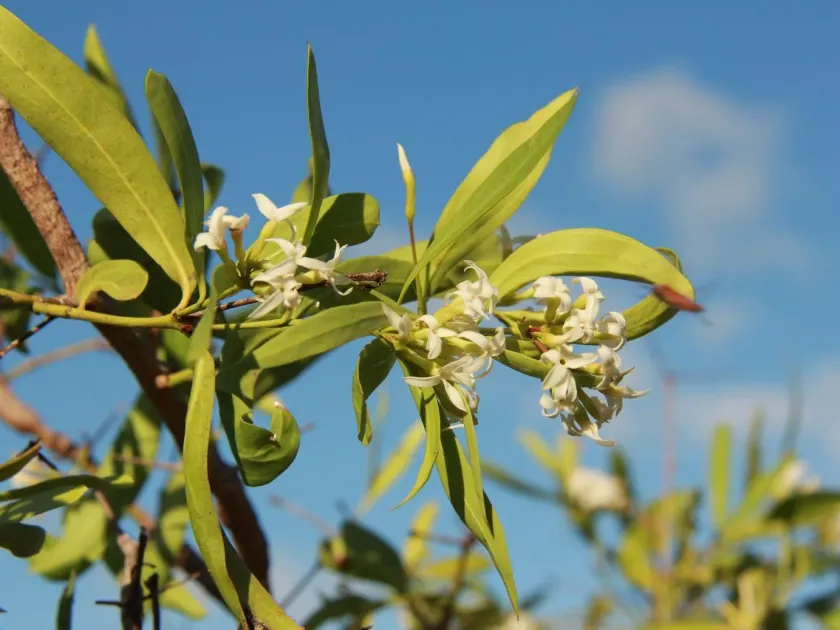
Description
Growing requirements
Carissa lanceolata is an evergreen xerophytic shrub belonging to the Apocynaceae family. Native to the arid tropical regions of Australia, this plant thrives in well-lit areas with well-drained, nutrient-poor, or sandy soils.
The crop is highly resilient to drought and intense solar radiation. It is considered a promising candidate for reforestation in arid zones and for the creation of protective hedges due to its ability to survive in harsh conditions.
Optimal growth temperatures for the plant range from +25 to +35 degrees Celsius. Carissa is extremely sensitive to waterlogging in the root zone, making the provision of efficient drainage a critical requirement for commercial cultivation.
Botanically, the plant is characterized by a dense crown armed with sturdy thorns, serving as a natural barrier. Its leather-like, lanceolate leaves are an adaptation to reduce transpiration during hot, dry spells.
Propagation of Carissa lanceolata can be achieved via seeds or vegetative methods. However, seed-based propagation requires precise stratification and stable temperature control to ensure successful germination and seedling establishment.
Yield
The economic value of this crop is primarily derived from its edible fruits, which offer a flavor profile comparable to cranberries or plums. These berries are recognized as significant sources of vitamins and antioxidants in their native habitat.
The fruits exhibit an oval shape and transition to a dark or vibrant red hue upon reaching maturity. Yield potential is heavily dependent on sunlight exposure and consistent hydration during the critical flowering and fruit-set phases.
Commercially, Carissa is valued for its extended fruiting season, allowing for sequential harvesting. The fruits are versatile, suitable for fresh consumption as well as industrial processing into jams, jellies, and juices.
Beyond its culinary utility, the plant is highly regarded for its aesthetic value and low-maintenance requirements. In various regions, it is integrated into ecological plantations to serve as a soil erosion control measure.
Peak productivity for the shrub is generally realized when the plant reaches 4 to 5 years of age. During this stage, the crown density is sufficient to support a robust and sustainable berry harvest.
Main diseases and pests
Carissa lanceolata possesses innate resistance to a wide array of fungal pathogens, largely due to the presence of alkaloids in its latex. This natural defense mechanism significantly minimizes the need for routine fungicidal applications.
Young plantations are primarily susceptible to pests within the Hemiptera order, specifically scale insects and mealybugs. These pests can infest foliage and young shoots, potentially causing plant deformities and stunted growth.
For pest management, the use of biological control agents is recommended over broad-spectrum insecticides to protect local pollinators. Precise dosing is necessary to ensure the health of the surrounding ecosystem.
Root rot is typically restricted to instances of irrigation mismanagement, where water saturation encourages the proliferation of soil-borne pathogens. Adhering to strict drainage protocols is the most effective preventative measure.
Regular monitoring of plant health is essential, especially during periods of high humidity which diverge from the plant's typical arid environmental requirements.