
Carissa bispinosa
Carissa bispinosa
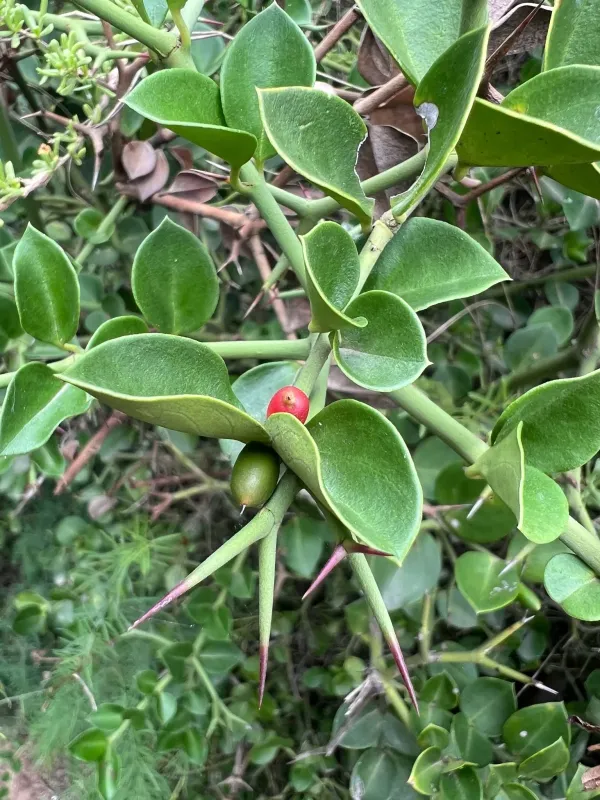
Description
Growing requirements
Carissa bispinosa, commonly known as the Num-num, is a member of the Apocynaceae family native to South Africa. It is an evergreen shrub recognized for its dense habit, fragrant white flowers, and edible red fruit that resembles small plums or cranberries in culinary applications.
The plant thrives in full sun, which is essential for healthy foliage growth and successful fruit set. While it can tolerate partial shade, insufficient light often results in poor flowering and a lack of fruit production, making location selection critical for agricultural success.
Soil requirements include a well-draining, nutrient-rich substrate. A slightly acidic to neutral pH is optimal for nutrient uptake. Because the plant is sensitive to waterlogged conditions, ensuring good drainage in containers or garden beds is the most important cultural practice.
In terms of climate, Carissa bispinosa is strictly tropical or subtropical and cannot withstand hard frosts. In cooler regions, it must be grown in containers and moved to a greenhouse or indoors during winter, where it should be kept in a cooler, well-lit position with reduced water.
The plant is characterized by strong, bifurcated (two-pronged) spines that make it a formidable natural barrier. During agricultural maintenance, such as pruning for canopy management, the use of thick gloves is mandatory to protect the operator from these sharp thorns.
Yield
Yield capacity depends on environmental conditions and pollination efficiency. When grown under ideal conditions, the plant can produce fruit almost year-round. The berries turn from green to a deep, glossy red when fully ripe, indicating that they are ready for harvest.
The fruit is highly valued for its sweet-tart flavor profile, making it suitable for jams, jellies, and desserts. Commercially, it is often processed into preserves, where its high vitamin C content and pectin levels are preserved for nutritional value.
For high-yield production in controlled environments, manual pollination is often necessary. By gently transferring pollen between flowers with a small brush, growers can significantly increase the ratio of fruit set compared to relying solely on wind or erratic insect movement.
The plant has dual-purpose utility: it serves as an excellent hedge plant for security and as a high-value berry crop. Its evergreen nature ensures year-round ornamental value, while its defensive thorns add to its practicality in landscape management.
Post-harvest handling should be prompt, as the fruit has a relatively short shelf life at room temperature. For commercial storage, immediate refrigeration is recommended to maintain the texture and flavor profile for further processing or fresh sales.
Main diseases and pests
Root rot is the most common pathology associated with improper moisture management. Over-watering creates an anaerobic environment in the root zone, which quickly encourages fungal infections and leads to irreversible plant decline.
Pests such as scale insects and mealybugs are frequently observed on Carissa bispinosa. They often cluster on the stems or the undersides of leaves, extracting plant sap and leading to stunted growth or the development of sooty mold on the leaf surfaces.
Spider mites are a persistent threat in environments with low humidity. They produce fine webbing and cause the foliage to yellow or drop prematurely, especially during dry spells or in poorly ventilated winter storage conditions.
Whiteflies can also become a significant issue in greenhouses. Effective control requires a combination of sanitation, biological control agents, or the application of appropriate insecticidal soaps to disrupt their life cycle and prevent population explosions.
Maintaining vigorous plant health through balanced fertilization and proper light exposure is the best defense against these threats. Healthy plants demonstrate higher natural resistance to pest infestations and faster recovery from mechanical stresses.