
Milkweed hybrids
Asclepias hybrids
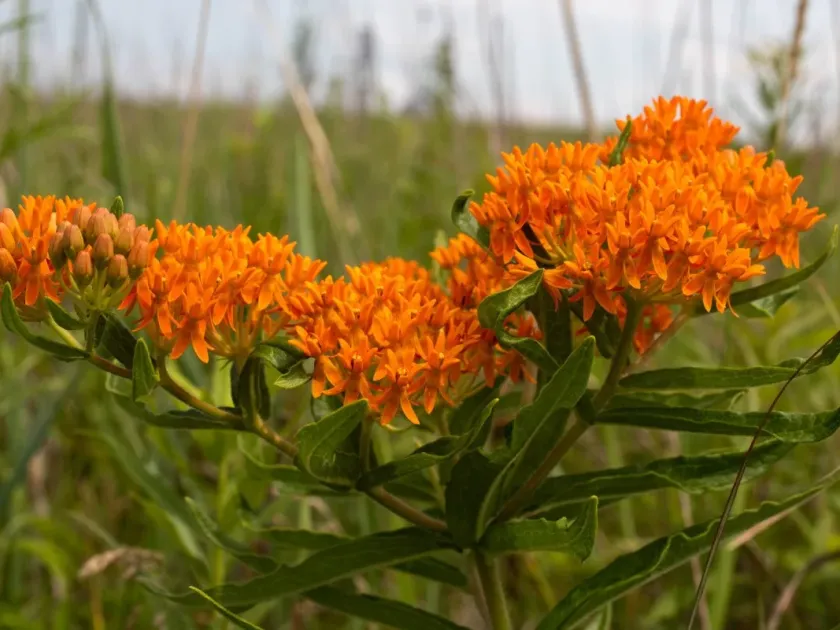
Description
Sowing dates
The sowing of milkweed hybrids is primarily carried out in the spring once the soil temperature at planting depth reaches 12–15 degrees Celsius. To ensure uniform germination, seeds require a period of stratification lasting 30–60 days at low positive temperatures.
In field conditions, seeds are sown using a row method with spacing ranging from 45 to 70 centimeters, which facilitates mechanical weeding and cultivation. The seeding depth is 2–3 centimeters in heavier soils and up to 4 centimeters in lighter sandy-loam soils.
The target plant density should be approximately 40,000 to 60,000 plants per hectare to ensure optimal biomass production. During the first year of growth, the crop develops slowly, focusing its energy on establishing a robust root system and a basal leaf rosette.
For vegetative propagation, root segments can be used and planted in rows during the autumn or early spring. This method significantly accelerates the timeline for achieving marketable product compared to seed-based cultivation.
Ensuring high cleanliness of the fields during the initial months after germination is critical, as young milkweed plants are highly sensitive to competition from aggressive weeds.
Growing requirements
Milkweed hybrids (Asclepias hybrids) belong to the Apocynaceae family and are perennial herbaceous plants featuring powerful rhizomes. The crop is highly valued for the significant latex content in its stems and for producing high-quality fiber comparable to silk in its properties.
The plant thrives in well-lit areas with light, fertile soils that offer excellent aeration and drainage. Waterlogging in the root zone is detrimental, so cultivation in low-lying areas with a high water table should be strictly avoided.
The optimal soil pH range for successful milkweed production is between 6.0 and 7.5. Once the root system is fully established and penetrates deep soil horizons, the crop exhibits excellent drought tolerance.
In temperate climate conditions, milkweed can withstand significant sub-zero temperatures, provided there is adequate snow cover. However, in snowless winters during severe frosts, the upper parts of the rhizome may be subject to freezing damage.
Milkweed is an exceptional nectar source, with its flowering period occurring in mid-summer, attracting a vast number of pollinators. This characteristic makes it a valuable component of sustainable agroecosystems.
Yield
The industrial use of milkweed hybrids covers several sectors, including the production of natural fiber from the stems and the extraction of high-value latex. The milkweed fiber is noted for its high strength, low weight, and superior thermal insulation properties.
Green biomass yields can reach 30–40 tons per hectare under intensive cultivation technology. Subsequent processing allows for the extraction of fibers, which are used in the textile industry and as high-quality padding for bedding.
The seeds of the plant contain significant amounts of fatty oils that find applications in technical chemistry and the paint and coating industry. Seed harvesting is conducted after the pods have fully matured and begin to dehisce.
The economic viability of the crop depends directly on the depth of primary processing at the site of harvest. Establishing full-cycle production chains significantly increases the profitability of milkweed cultivation.
Milkweed hybrids are also viewed as a promising feedstock for the production of bioplastics due to the high polymer content present in the milky sap.
Main diseases and pests
Common pests include aphids, which colonize young shoots and inflorescences, extracting sap and reducing overall plant productivity. Various species of leaf beetles and bugs that damage vegetative organs may also be observed.
Among fungal diseases, root rot is the most prevalent, often arising from poor agronomic practices and waterlogged soil. To prevent outbreaks, crop rotation must be strictly followed, and overcrowding of fields should be avoided.
Powdery mildew can affect the foliage in conditions of high air humidity and poor ventilation. Regular field inspections are recommended, and fungicide application should be initiated at the first signs of spreading infection.
Managing diseases and pests requires a comprehensive approach, including the use of resistant varieties and maintaining optimal plant spacing. Recent years have shown the high effectiveness of biological control methods on industrial plantations.
Controlling weed populations is essential, as weeds not only compete for resources but also serve as reservoirs for diseases and harmful insects that threaten milkweed health.
Harvesting
Stalk harvesting for fiber production is carried out at the onset of seed maturation, when the concentration of valuable substances in the aerial parts reaches its maximum. Specialized mowers are used to ensure an even cut at the required height.
After cutting, the biomass is left in the field to wilt before being collected for mechanical cleaning and fiber separation. This separation process requires specialized machinery due to the delicate nature of the fibers.
Seed harvesting requires extreme attention, as the seeds are equipped with hair-like appendages (pappus) and are easily dispersed by the wind upon pod opening. Pod collection is performed selectively or by using vacuum-equipped harvesters.
Stored raw materials must be kept in dry, well-ventilated facilities to prevent mold growth and maintain fiber quality. Milkweed cannot withstand prolonged storage in damp conditions.
A well-organized harvest process minimizes losses and ensures the delivery of high-quality raw materials that are in demand across various processing industries.