
Poke milkweed
Asclepias exaltata
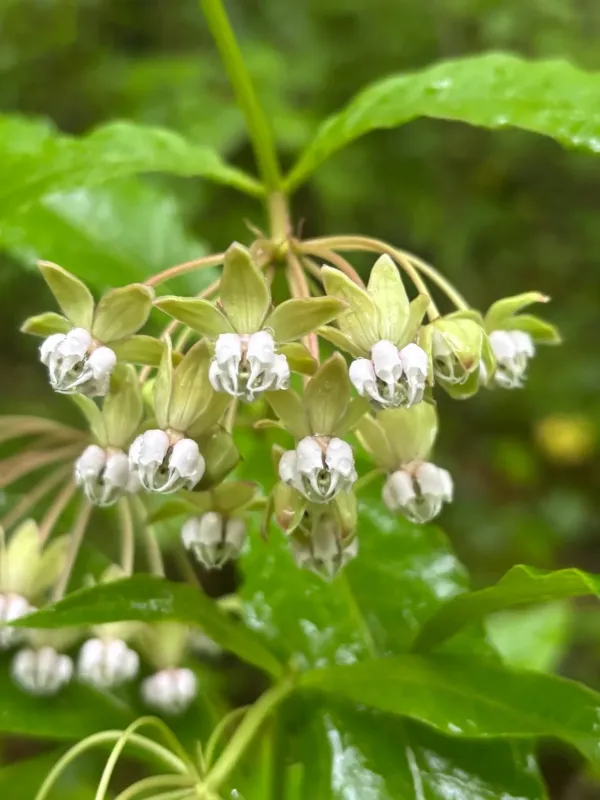
Description
Sowing dates
Poke milkweed seeds require a period of cold stratification for successful germination, typically lasting 30 to 60 days at near-freezing temperatures.
Sowing should ideally occur in late autumn, allowing the natural winter cycle to satisfy the dormancy requirements of the seeds before spring emergence.
When spring sowing, ensure seeds are lightly pressed into the soil surface; they should not be buried deeply, as light is a prerequisite for germination.
Maintain consistent soil moisture after sowing to prevent the seeds from drying out during the critical stage of radicle emergence.
Spacing plants approximately 60–75 cm apart allows for proper aeration and individual development of each plant cluster in the field.
Growing requirements
Poke milkweed is a perennial herbaceous plant belonging to the Apocynaceae family, native to the woodlands of North America.
Unlike many other milkweeds, this species thrives in partial shade and is well-adapted to the understory conditions of forest edges.
It prefers deep, moist, and loamy soils rich in organic matter, reflecting its natural habitat in woodland environments where decomposition is high.
The plant is sensitive to excessive soil dryness, meaning supplemental irrigation is often necessary during prolonged summer heatwaves to maintain productivity.
Optimal site selection includes areas with good soil structure that prevent waterlogging, as the roots are susceptible to decay if trapped in stagnant water.
Yield
The primary agricultural value of Poke milkweed lies in its status as a prolific honey plant, providing significant nectar resources for bees and butterflies.
Historically, the strong bast fibers found within the stalks were extracted and utilized for cordage, showcasing the plant's potential as a fiber crop.
The latex produced by the stems contains compounds that are increasingly being researched for various industrial and biochemical applications.
Due to its high nectar production, planting this species near orchards or vegetable fields can significantly enhance local pollination services.
- High-quality nectar for honey production.
- Sustainable source of durable plant fiber.
- Biodiversity improvement in agricultural landscapes.
Main diseases and pests
Aphids are the most prevalent pest of Asclepias exaltata, frequently congregating on the succulent stems and developing flower buds during the spring.
Fungal leaf spots can occur in dense stands where air circulation is poor, particularly during humid seasons or following periods of excessive rainfall.
Root-knot nematodes can potentially affect root development if the crop is planted in infested soil without proper prior soil sterilization or rotation.
Managing the plant density and ensuring adequate spacing is the best agronomic practice to reduce the incidence of both fungal diseases and pest outbreaks.
In the event of severe pest pressure, localized applications of organic insecticidal soaps are preferred to preserve the integrity of the ecosystem services provided.