
Antelope horns
Asclepias campestris
Description
Sowing dates
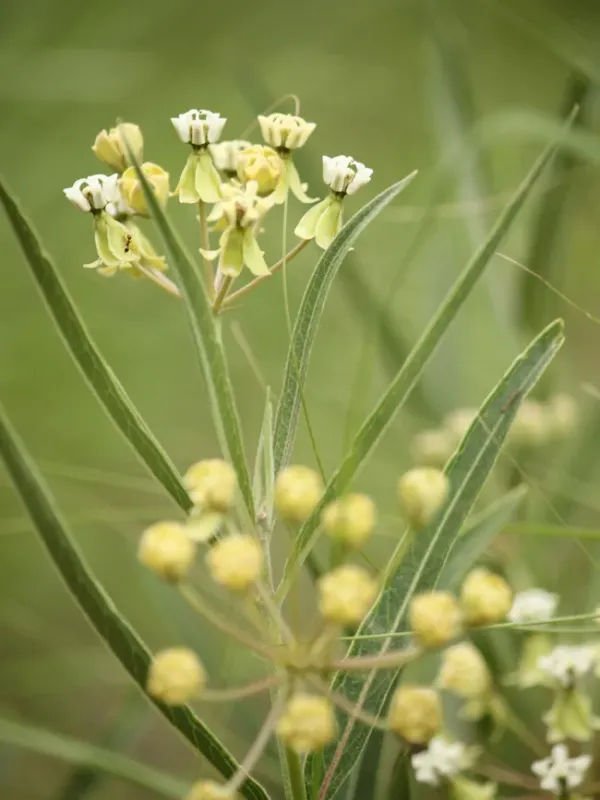
Antelope horns (Asclepias campestris) is a perennial herbaceous plant belonging to the Apocynaceae family, recognized for its importance in ecological and agricultural systems.
Sowing should ideally occur in the spring, once the soil temperatures have risen sufficiently, typically when air temperatures consistently stay above 15°C.
Preparation of the seedbed involves creating a fine, weed-free environment to ensure optimal germination and seedling establishment during the early stages.
The seeds are planted at a shallow depth of approximately 1 to 2 cm, ensuring they maintain contact with moist soil for improved emergence rates.
Proper spacing between rows is essential for this species to allow for effective weed management and to minimize competition for resources during the growing season.
Growing requirements
This species thrives in well-drained sandy or loamy soils, showing a preference for environments that prevent moisture accumulation around the root zone.
Exposure to full sunlight is a critical requirement for the successful development of Asclepias campestris, as it does not tolerate shaded locations.
The plant exhibits significant drought tolerance once established, making it suitable for cultivation in regions with irregular precipitation patterns.
It prefers neutral to slightly alkaline soil conditions and can adapt to various nutrient levels, though soil testing is recommended to optimize growth.
Maintaining proper soil structure through minimal tillage practices helps preserve the integrity of the root system and promotes long-term plant health.
Main diseases and pests
Aphids and various coleoptera species are common pests that may feed on the foliage and sap, potentially impacting the plant's overall vigor and yield.
Fungal pathogens such as rust or leaf spot can manifest in dense or poorly ventilated stands, especially during periods of excessive rainfall or high humidity.
Invasive weeds pose the most significant threat to young plants, which grow slowly initially and require dedicated management to avoid being outcompeted.
Integrated pest management strategies, including crop rotation and the use of natural enemies, are highly effective in managing the population of harmful pests.
Regular monitoring of the fields during the peak growing season is essential for the early detection and management of potential biotic stressors.
Harvesting
Harvesting for biomass or fiber production is best conducted during the full flowering stage, which ensures the highest quality of the collected material.
Standard agricultural machinery for forage harvesting is suitable for this crop, provided it is adjusted to the appropriate cutting height to protect the crown.
Post-harvest handling requires efficient drying techniques to prevent mold development, especially when the plant material has high moisture content.
When the crop is grown for seed production, harvest occurs once the pods begin to dehisce, requiring careful handling to prevent seed loss during transport.
Strategic timing of the harvest is crucial for maintaining the viability and nutritional value of the plant, regardless of the intended agricultural use.