
Allamanda hybrids
Allamanda hybrids
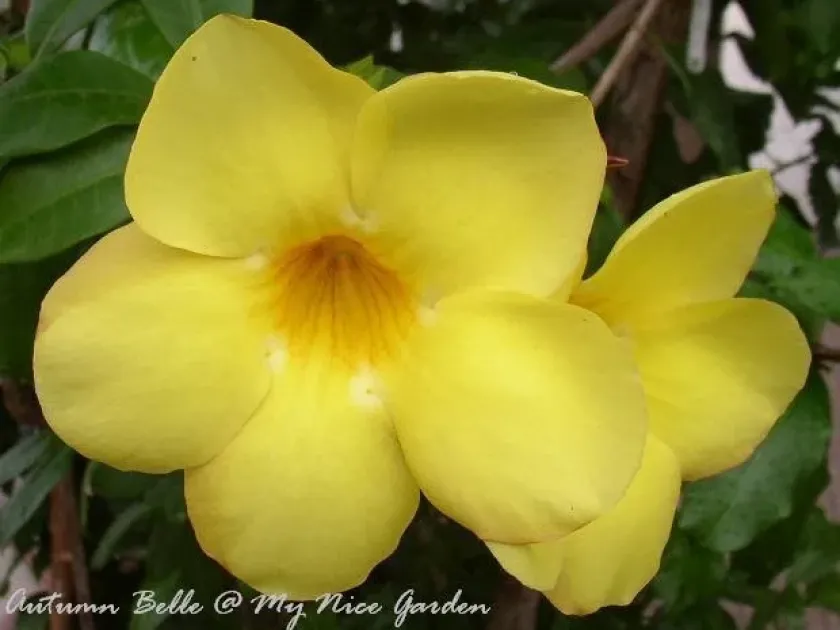
Description
Growing requirements
Allamanda hybrids belong to the Apocynaceae family. These plants are popular ornamental cultivars derived from tropical species native to the Americas, known for their large, trumpet-shaped yellow or pinkish-purple flowers.
These plants require a significant amount of bright, indirect sunlight to thrive and produce blooms. In temperate climates, they must be kept in warm, frost-free environments, ideally maintaining temperatures between 20°C and 25°C throughout the year.
Soil requirements for Allamanda are specific: it must be well-draining, nutrient-rich, and slightly acidic. A mixture of peat, loam, and coarse sand is highly recommended to prevent compaction and allow for proper root aeration.
Watering frequency should be high during the growing season. The soil surface should be kept consistently moist but never waterlogged. As the plant enters dormancy, watering should be reduced significantly to allow the plant a resting period.
High humidity is essential for the healthy growth of the foliage. In indoor settings, consistent misting or the use of humidity trays is necessary to ensure the plant does not suffer from dry air stress, especially in winter.
Main diseases and pests
Common pests associated with Allamanda hybrids include spider mites, mealybugs, and scale insects. These pests often congregate in leaf axils or on the undersides of leaves, requiring frequent inspections for early detection.
Root rot is the most common disease encountered, typically resulting from overwatering or poorly drained containers. Once root systems are compromised, recovery is difficult, making prevention through drainage control vital.
Nutrient deficiencies, particularly iron or magnesium, can cause leaf chlorosis. Regular fertilization with a balanced, micronutrient-rich formula during the growth phase helps maintain vibrant green foliage and optimal health.
Cold drafts are detrimental to the plant and can cause sudden leaf and bud drop. Positioning the plant in a stable location away from air conditioning vents or drafty windows is crucial for its longevity.
Using sterile pruning tools is a key agronomic practice to prevent the spread of fungal pathogens. Any diseased plant parts should be removed promptly and disposed of away from other healthy vegetation.