
Broad-leaved snowdrop
Galanthus platyphyllus
Description
Sowing dates
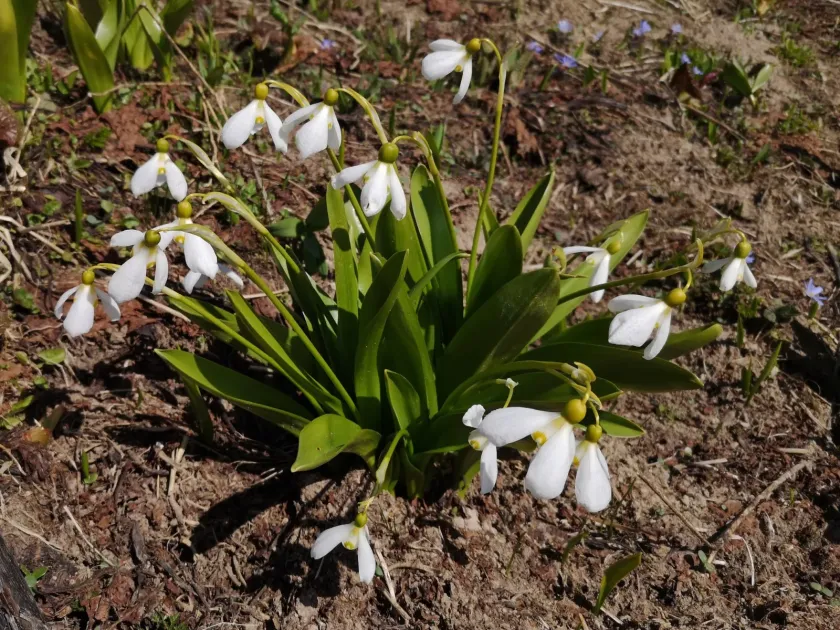
The broad-leaved snowdrop (Galanthus platyphyllus) is a bulbous perennial belonging to the Amaryllidaceae family. In agricultural and horticultural practice, vegetative propagation through offsets (daughter bulbs) is the primary method for producing quality planting material.
Planting typically takes place in late summer or early autumn, allowing the roots to establish themselves effectively before the onset of winter frost and the frozen soil stage.
The bulbs should be planted at a depth of 5 to 10 centimeters, depending on their size and the soil type, ensuring they are protected from extreme temperature fluctuations.
While seed propagation is possible, it is a slow process; seeds should be sown immediately after collection into moist, light soil to maintain viability, as they dry out quickly.
The maturation period from seed to flowering bulb ranges from three to five years, which is why commercial growers prioritize the division of established clumps.
Growing requirements
This species thrives in partially shaded environments, mirroring its natural habitat in the Caucasus, where it grows under forest canopies and in humid mountain meadows.
Soil requirements include high organic content, good drainage to prevent waterlogging, and a neutral to slightly acidic pH level for optimal nutrient uptake.
The plant is highly frost-hardy and well-adapted to cooler climates, making it a reliable choice for temperate regions where early spring interest is required.
Moisture management is crucial during the spring growing season; while the soil should remain moist, standing water must be avoided to prevent bulb decay.
Regular mulching with organic material can help regulate soil temperature and retain essential moisture during the early spring development phase.
Yield
The broad-leaved snowdrop is primarily cultivated for ornamental purposes, specifically for early spring garden displays, rock gardens, and naturalized woodland areas.
Yield, in this context, is measured by the multiplication rate of the bulbs; a healthy, well-nourished plant can produce multiple offsets annually if provided with optimal conditions.
To maximize ornamental yield and bulb health, balanced fertilization with phosphorus and potassium is recommended after the flowering phase has concluded.
The plant is suitable for mass planting, with recommended densities of 50 to 80 bulbs per square meter to create a dense, visually impactful carpet effect.
Productivity is also linked to the longevity of the bulbs; healthy clumps can remain in the same location for many years without the need for constant division.
Main diseases and pests
Fungal diseases, particularly gray mold and various forms of rot, are the most significant threats, especially in heavy or excessively wet soil conditions.
Bulb mites and certain soil-dwelling larvae can damage the root system and bulb structure, leading to stunted growth or complete loss of the plant.
Preventative treatments, such as dipping bulbs in fungicide solutions before planting, are highly recommended to establish a disease-free nursery stock.
Small rodents such as voles can cause damage by consuming bulbs during the winter months, necessitating physical barriers or protective measures in the garden.
Routine monitoring and prompt removal of any diseased or decaying foliage are essential practices to prevent the spread of infections within the planting area.
Harvesting
Bulb harvesting occurs during the dormancy phase, specifically when the foliage has turned yellow and withered, indicating that energy has returned to the bulb.
Once lifted, bulbs should be cleaned of soil and debris, then cured in a cool, shaded, and well-ventilated area to ensure they are properly dried before storage.
Proper storage is vital; bulbs should be kept in a dry, cool place with good air circulation to prevent premature sprouting or dehydration during the dormant period.
Utilizing crates with mesh bottoms for drying helps maintain consistent airflow and significantly reduces the risk of mold formation during the curing process.
Regular inspections throughout the storage period are necessary to remove any damaged bulbs and prevent the spread of fungal growth among the stored material.