
Ikarian snowdrop
Galanthus ikariae
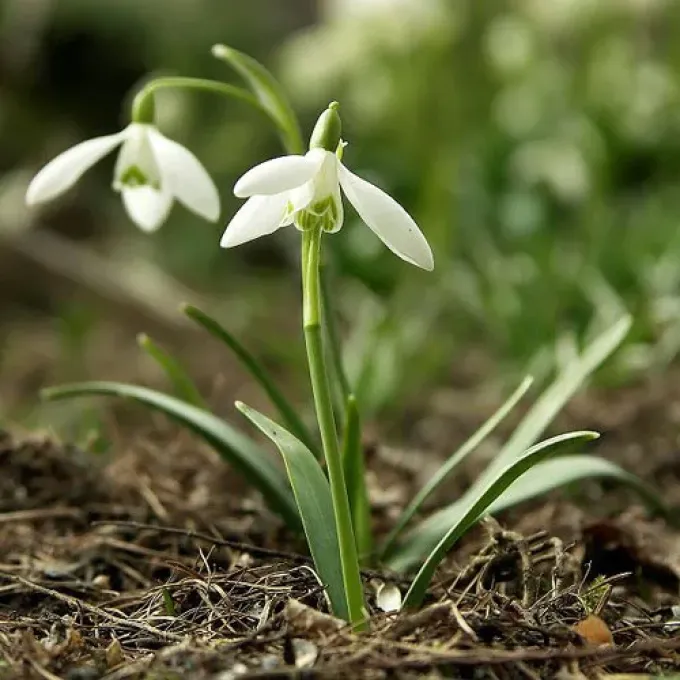
Description
Sowing dates
The optimal time for planting Ikarian snowdrop bulbs is late summer or early autumn, typically between August and September. This allows the root system to establish itself before the soil temperatures drop significantly during winter.
When planting, bulbs should be placed at a depth of approximately 7 to 10 centimeters. Ensuring the correct depth is crucial for the plant to emerge at the right time in early spring and to maintain bulb health throughout the year.
Spacing is essential for the healthy development of snowdrop clusters. Bulbs should be planted about 10–12 centimeters apart to prevent overcrowding, which can lead to reduced flowering and increased competition for nutrients.
For propagation, offset bulbs should be carefully detached from the parent bulb during the dormant season. Replanting these offsets immediately ensures they continue to grow without the stress of drying out, promoting faster colony expansion.
After planting, the soil should be lightly watered and covered with a layer of mulch. This helps retain moisture and provides a protective barrier against extreme temperature fluctuations, which can damage the developing roots.
Growing requirements
The Ikarian snowdrop (Galanthus ikariae) is a perennial bulbous plant belonging to the Amaryllidaceae family. Native to the eastern Mediterranean, specifically the Aegean islands, it thrives in environments that mimic its natural temperate habitat.
This plant prefers locations with dappled shade or partial sun, particularly beneath deciduous trees. Such areas provide the necessary sunlight during early spring and protective shade during the heat of the summer months.
Soil quality is paramount for the successful cultivation of this species. It requires well-draining, humus-rich soil with a neutral to slightly alkaline pH. Heavy or waterlogged clay soils should be amended with organic matter and grit to improve aeration.
Temperature requirements include a period of cold dormancy, which is vital for the initiation of spring flowering. The Ikarian snowdrop is generally hardy in temperate zones, provided the winter conditions are not excessively harsh.
Maintenance involves moderate watering during the active growing season. Once the foliage begins to yellow and wither after flowering, watering should be reduced to facilitate the plant's entry into its natural summer dormancy period.
Main diseases and pests
Fungal pathogens represent the most significant threat to snowdrop populations. Botrytis, or gray mold, often occurs if the soil remains excessively wet or if air circulation is insufficient, necessitating careful moisture management.
Viral infections can manifest as mottled leaves or stunted growth. Because there is no cure for these viruses, infected bulbs should be promptly removed and disposed of to prevent the spread to adjacent healthy plants.
Insects like the bulb fly can cause severe damage to the basal plate of the bulb. Applying preventative insecticidal treatments or using physical barriers can help protect the underground parts of the plant from these pests.
Small rodents such as voles can be destructive, as they often consume bulbs during the winter months. Planting bulbs inside wire mesh cages is a proven technique for securing the collection against rodent depredation.
Disease management is best achieved through strict sanitation practices. Always inspect bulbs before planting, discard any showing signs of rot, and avoid using raw manure in the planting beds to keep the soil environment clean and healthy.